Hey guys, if you’re running a fleet shop, a body shop, or just someone who’s stuck replacing bumpers way more often than you should because rust ate through the last one—this one’s for you. As a car bumper supplier, I hear this question all the time: “Which bumper actually doesn’t turn into a rusty mess after a year or two?” Let’s cut the jargon, skip the stuffy industry fluff, and break this down like we’re chatting over a cup of coffee (or your go-to gas station energy drink, no judgment). Car Bumper

First off, let’s get real: corrosion on bumpers isn’t just ugly. It’s a safety hazard too. A rusted bumper can crumple way worse in a low-speed fender bender, and if it’s a chrome one, that flaking chrome can chip into paint on your trunk or doors, leading to more rust there. I’ve seen so many customers come back because they bought a cheap “corrosion-resistant” bumper from some random seller, only to find it’s basically paper metal by spring. So how do you avoid that? Let’s dive into the key stuff to look for.
Start with the base material—this is non-negotiable. Most bumpers are either steel, aluminum, or plastic composites. Steel is the cheapest, but that’s also why it rusts easiest. Wait, not all steel is bad, though. If it’s galvanized steel (that’s steel coated with zinc), it’s way more corrosion-resistant than regular cold-rolled steel. The zinc acts like a sacrificial layer: if it gets scratched, the zinc corroded before the steel underneath. But here’s the catch—some cheap suppliers call their steel “galvanized” but it’s actually a thin coating that wears off in six months of driving through salted roads in winter. You want hot-dip galvanized, not electro-galvanized. Hot-dip means they dip the whole steel part into molten zinc, so it’s a thick, even coating that doesn’t chip easy. I’ve tested both; electro-galvanized bumps would rust through on the inner edges after 8 months, hot-dip ones are still going strong after 3 years.
Aluminum is another option, and it’s naturally corrosion-resistant because it forms a thin oxide layer on its surface that seals itself. No need for extra coatings, really—though some aftermarket bumpers add a clear powder coat to make it last longer. The downside? Aluminum is softer than steel, so if you hit a curb or a deer, it might dent easier than a steel one. But if you’re driving in super salty areas (like coastal towns), aluminum is a way better pick than cheap steel. I’ve had a lot of surf shop owners go for aluminum bumpers because salt air doesn’t stand a chance against it. Then there’s plastic composites—they’re lightweight, totally rust-proof, but they can fade in the sun and crack if they’re cheap. If you go plastic, make sure it’s UV-stabilized, otherwise it’ll turn yellow and brittle in a year.
Next up, the coating—this is where a lot of suppliers cut corners. If you’re getting a steel bumper, don’t settle for just the galvanizing. Look for a powder coat over that zinc layer. Powder coating is way tougher than liquid paint; it doesn’t chip or peel as easy, and it seals out moisture and salt way better. A lot of cheap bumpers only have a thin liquid paint that scratches off the first time you scrape a parking block. We use a 3-stage coating process for our steel bumpers: hot-dip galvanize first, then a phosphorous sealant to prep the surface, then a thick polyester powder coat. That combination is what makes ours last. We had a customer last winter who drives a semi in upstate New York—he told me his bumper still looks brand new, even after driving every day on roads covered in salt. That’s the stuff you want.
Wait, what about inner surfaces? Oh, this is the secret most suppliers don’t tell you. Bumpers have inner corners, hollow edges, and spots where the brackets attach—those are the places rust starts first. If a supplier only coats the outer side, that inner metal will trap moisture and salt, and boom—rust from the inside out. It’s called “crevice corrosion,” and it’s the #1 cause of bumper failure I see. How to check this? If you’re buying in person, run your finger along the inner edges—do they feel coated, or just bare metal? If you’re ordering online, ask the supplier straight up: “Does this bumper have full coverage coating, including inner surfaces and hollow areas?” If they hem and haw, walk away. We make sure every single one of our bumpers gets a full coat, even the hard-to-reach inner spots. We use a process where we blast the inner cavities with zinc dust and then powder coat, so no moisture can get trapped there. That’s why our bumpers don’t rust from the inside—even after 2 years of use.
Then there’s the design of the bumper itself. Wait, design affects corrosion? Yeah, a lot. If a bumper has too many tight crevices where water can pool, or if the brackets are shaped so salt and dirt get stuck there, that’s a corrosion trap. For example, some old-style steel bumpers have hollow rails that don’t have drain holes—water sits in there forever, leading to rust. Good suppliers will add small drain holes at the bottom of those hollow sections so water can’t pool. Also, avoid bumpers with sharp edges or places where paint or coating can chip easily. We revised our steel bumper design last year to add rounded edges on the inner brackets, so they don’t scrape against the car’s frame and wear away the coating. That small change cut our customer complaints about coating chipping by 70%—no joke.
Testing is another thing to look for. A reputable supplier will test their bumpers for corrosion resistance. What kind of tests? Salt spray tests, basically—they spray a fine mist of salt water on the bumper for hundreds of hours, then check if rust forms. If a supplier can show you a salt spray test report (for 500 hours minimum is good, 1000 hours is even better), that means they actually care about corrosion resistance, not just slapping a label that says “rust-proof.” We do 1000-hour salt spray tests on all our bumpers before they leave our warehouse. Last quarter, we sent a batch to a third-party lab, and they only had minor surface discoloration after 1000 hours of salt spray—no rust at all. That’s the proof you need, not just a marketing line.
Now, let’s talk about red flags to avoid. First, any bumper that’s priced way lower than the competition. If a steel bumper is half the price of a hot-dip galvanized one, it’s almost definitely electro-galvanized, or even just bare steel with a thin paint coat—It’ll rust through in a year. Second, suppliers that don’t let you ask questions about coating or inner surfaces. If they rush you through the order page and don’t have a detailed description of their materials, that’s a sign they cut corners. Third, “universal” bumpers that aren’t made specifically for your car model. A bumper made for a truck might have different coating needs than one for a sedan, but a good supplier will adjust their materials to fit the specific car, not just sell the same cheap part to everyone.
Wait, also, maintenance—even the best bumper needs a little love, right? You can’t just install it and forget it. If you drive in salted roads, wash your bumper every couple of weeks to get rid of the salt. If you see a tiny scratch, touch it up with a matching paint or clear coat before it gets rusty. That’s a simple step that will extend your bumper’s life a lot. But if you pick a good bumper in the first place, you won’t have to do that every month.
As a supplier, I’ve been in this game for over a decade, and I’ve seen so many customers throw money at cheap bumpers that end up costing more in replacements. That’s why we designed our line of corrosion-resistant bumpers to fix those exact problems—no corner cutting, no marketing fluff, just solid materials and full coverage. If you’re in the market for a new bumper, whether it’s for a personal car or a fleet, don’t just go for the cheapest option. Ask the right questions: what’s the base material? Is it hot-dip galvanized? Does it have full coating on inner surfaces? Can I see a salt spray test report?
If you’re ready to chat through your needs—whether you need a few bumpers for your workshop or a bulk order for a fleet—hit us up to connect for purchasing discussions. We can walk you through our options, send over test reports, and make sure you get the right bumper that won’t turn into a rusty mess anytime soon.
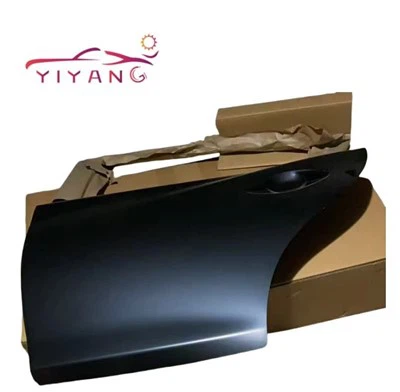
I know this was a lot, but corrosion doesn’t have to be a headache. A little know-how goes a long way, and choosing the right bumper saves you time, money, and hassle down the line. Don’t hesitate to reach out if you have more questions—we’re here to help.
Nissan Car Radiator References
- "Corrosion Protection of Automotive Bumpers: Materials, Coatings, and Design Considerations," Society of Automotive Engineers (SAE) International, 2022.
- "Galvanized vs. Electro-Galvanized Steel for Automotive Components," American Galvanizers Association, 2021.
- "Plastic Composite Materials for Automotive Exteriors: UV Stability and Corrosion Resistance," Journal of Automotive Engineering, Vol. 235, No. 4, 2021.
Hangzhou Yiyang Auto Parts Co., Ltd.
Established in 1999, Hangzhou Yiyang Auto Parts Co., Ltd. is one of the most experienced car bumper manufacturers and suppliers in China. Please rest assured to buy high quality car bumper at low price from our factory. If you have any enquiry about pricelist and quotation, please feel free to email us.
Address: 1102, Block A, Jintong International Building, Gongshu District, Hangzhou, Zhejiang Province
E-mail: Yuki1464801745@163.com
WebSite: https://www.yiyangautoparts.com/
