As a marine cable compounds supplier, I’m often asked a deceptively simple question: “What is the melting point of marine cable compound?” The answer isn’t a single number scribbled in a spec sheet—it’s a conversation about environment, application, and the quiet constraints that keep subsea and offshore infrastructure running 24/7. Let’s break this down, because getting it wrong isn’t just a technical mistake—it can cost thousands, and even lives, when cables fail in harsh marine conditions. Marine Cable Compounds
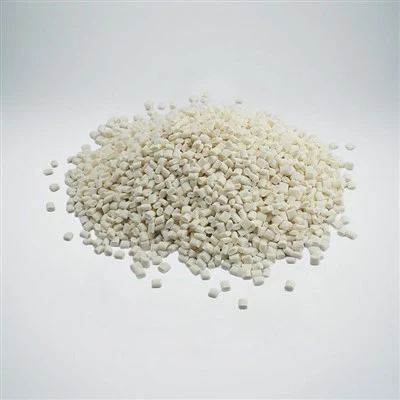
First, let’s ground this in what marine cable compound actually is. Unlike generic plastic or rubber, it’s a specialized blend designed to do three non-negotiable jobs in marine environments: insulate against saltwater’s corrosive electricity, absorb the constant physical stress of tugs, waves, and subsea installation, and resist degradation from UV rays, oil, and fluctuating temperatures. Most of our compounds are dual-cure systems—part epoxy resin, part flexible thermoplastic modifiers, because pure epoxy is too brittle for deep water, and pure thermoplastics can’t handle the high voltage many marine cables carry. That blend is why melting point is such a critical metric, but also why it’s not a one-size-fits-all number.
Let’s start with the core: the “melting point” here is rarely a sharp, textbook-like temperature for our materials. Many people confuse melting (a solid turning to a fully liquid state) with glass transition temperature, but for our compounds, we talk about two key thresholds: the softening point (where the material starts to bend and deform under pressure) and the melting point (where it becomes a viscous liquid, suitable for installation or rework). For standard general-purpose marine cable compounds we supply for nearshore docks and shallow water (0 to 500 meters deep), the softening point hovers between 70°C and 85°C, and the melting point ranges from 110°C to 130°C. That range isn’t arbitrary—it’s tested under IEC 60092-501, the global standard for marine electrical installations, because if a compound melts at 115°C, that means it can withstand the 80°C internal heat of a high-voltage power cable carrying 10kV without softening during normal operation.
But here’s where the real nuance comes in: deepwater marine cable compounds (for 500 to 3,000 meters, or deeper for subsea telecom) have much higher melting points. At 1,000 meters, hydrostatic pressure is roughly 100 atmospheres—enough to compress a material that would melt at 120°C at surface level. To counter that, we add high-density polyethylene (HDPE) copolymers and cross-linking agents, which raise the melting point to 150°C to 170°C. I’ve seen this play out first-hand with a project off the coast of Scotland a few years back; a competitor had used a standard shallow-water compound for a 800-meter power cable, and when the cable heated up during a year of continuous operation, the compound softened, pulled away from the conductor, and caused a short that shut down an offshore wind farm for 10 days. That mistake cost the operator over $2 million in downtime—all because they picked a melting point that didn’t match their operating depth.
Then there are specialized compounds for specific jobs. Fire-retardant marine cable compounds, required for all passenger ships and offshore platforms, have slightly lower melting points but a different critical threshold: they won’t drip molten material when exposed to flame, which is a safety requirement per IMO FTP Code 2010. These compounds have a melting point of 120°C to 140°C, modified with aluminum trihydrate to smother flames, so even if they soften at 75°C, they won’t flow and spread a fire. We also make low-temperature compounds for arctic marine operations—think oil rigs in the North Sea or subsea cables off Alaska—where the environment can drop to -40°C. These have a melting point of 100°C to 120°C, but their softening point is just 55°C, because if they were too stiff in cold, they’d crack during installation; the trade-off is that they stay flexible at low temps without losing their insulating properties.
I get a lot of new customers asking why we can’t just make a compound with a 200°C melting point for every job. The answer is weight and installation cost. A compound with a melting point above 180°C is much denser, which means the cable is heavier, harder to haul onto a ship, and more expensive to lay. For a nearshore dock cable, that extra weight and cost would be overkill—they don’t need to withstand 1,500-meter pressure, so why pay for it? We always walk new customers through a quick assessment: where is the cable going? What voltage will it carry? What’s the expected ambient temperature? That’s how we match the right melting point to the job, instead of pushing a generic product.
Another common question: does marine cable compound’s melting point change over time? Yes, and that’s a big reason regular testing is required. Saltwater corrosion, UV exposure, and thermal cycling (like a cable heating during the day and cooling at night) break down the polymer chains in the compound, which lowers the melting point. A compound that has a 130°C melting point new can drop 10°C after 5 years of continuous submersion in warm coastal water, which means it’s no longer suitable for high-voltage applications. That’s why we advise customers to perform annual insulation resistance tests on their cables—catching that shift in melting point early can prevent a catastrophic failure.
As a supplier, our job isn’t just to give a number when someone asks “what’s the melting point.” It’s to explain why that number matters, how it’s tested, and which version is right for their specific marine environment. We’ve worked with everyone from small boat manufacturers needing a simple 120°C melting point compound for dockside cables, to deep-sea telecom companies needing a 160°C melting point compound for cables that run 2,000 meters below the ocean surface. Every project is different, and the melting point is one of the first specs we review to make sure our product holds up when they need it most.

If you’re working on a marine infrastructure project—whether that’s a new offshore wind farm, a subsea telecom cable, or a passenger ship’s electrical system—and you’re not sure which marine cable compound’s melting point is right for your needs, don’t hesitate to reach out. We can walk through your application, share our test data, and help you pick a compound that balances performance, cost, and longevity for your specific marine environment.
EU Standard Railway Cable Compounds References
- International Electrotechnical Commission. (2020). IEC 60092-501: Electrical installations in ships – Part 501: Special features – Cables, optical fibre cables and electrical wires for power, control and communication.
- International Maritime Organization. (2010). IMO FTP Code: International Code for Fire Safety Systems.
- ASTM International. (2018). D3418: Standard Test Method for Transition Temperatures and Enthalpies of Fusion and Crystallization of Polymers by Differential Scanning Calorimetry.
- Subsea Cable Technology Association. (2022). Marine Cable Compound Material Specification Guide.
Opta New Materials (Jiangsu) Co., Ltd.
As one of the most professional marine cable compounds manufacturers and suppliers in China, we also support customized service. We warmly welcome you to buy bulk durable marine cable compounds from our factory. If you have any enquiry about free sample, please feel free to email us.
Address: No.80, Jingang Avenue, Zhenjiang New Area, Zhenjiang City, Jiangsu Province, China.
E-mail: le.yin@optachem.com
WebSite: https://www.optanewmaterials.com/
