As a PVC film supplier, I often get asked by kitchenware manufacturers how our material fits into their packaging needs. The truth is, PVC film isn’t just a random plastic wrap—it’s a workhorse that addresses many of the specific challenges kitchens and cooking-related products face daily. I’ve worked with dozens of small kitchen gadget brands and large cookware lines over the past eight years, and each time, the value PVC brings to packaging becomes more clear. Let me break down the real, practical applications we see in this space, not just as a supplier, but as someone who’s walked through clients’ production floors and listened to their packaging pain points. PVC Film

First, let’s start with the most obvious yet critical use: protecting small kitchen tools like spatulas, measuring cups, and kitchen scissors. You might think any clear film would work here, but PVC stands out because of its rigidity and puncture resistance. I remember a client who made silicone spatulas—they were constantly getting return requests because the packaging would tear during shipping, exposing the soft silicone to dirt in warehouses. We switched them to a 100-micron PVC film with a matte finish, and the tear rate dropped by 92% within three months. The rigid structure holds its shape, so even when stacked in boxes, the packaging doesn’t crumple around the product. Another big plus here is clarity. Kitchenware shoppers want to see what they’re buying—no hidden creases or foggy film. PVC’s optical clarity means customers can inspect the tool’s smooth finish, color, and any engraved details right through the package, which boosts confidence in a product that’s often bought based on looks and texture.
Then there’s the packaging of hard cookware items, like aluminum baking sheets, stainless steel saucepans, and non-stick pans. These products are prone to two issues: scratches and moisture damage. PVC film’s ability to act as a barrier solves both. For scratches, we offer a version with a low-friction additive that prevents the film from rubbing against the pan’s surface during handling. One of our largest clients in the Midwest makes non-stick frying pans; they used to use polypropylene wrap, which would sometimes catch on the pan’s coating and leave micro-scratches that made the product look used. Our scratch-resistant PVC film eliminated that problem entirely. For moisture, kitchens are humid environments, and shipping from manufacturing plants to retailers or even local stores can expose products to condensation. PVC has excellent moisture vapor transmission rate (MVTR) properties—meaning it keeps water out. We did a test last year where we stored a wrapped baking sheet in a 75% humidity room for 30 days; the metal under the PVC showed no signs of rust or discoloration, while a similar sheet wrapped in LDPE had a faint patina starting to form. That’s not just about looks—it’s about a product arriving in perfect condition, which cuts down on returns and retailer rejection.
Another application that’s gained traction lately is blister packaging for precision kitchen tools, like digital food thermometers, food scales, and espresso tampers. Blister packaging is the plastic bubble that holds the product, usually backed by a card, and PVC is the go-to material for the blister part. Why? Its thermoformability is unmatched. When heated, PVC stretches evenly into precise, tight-fitting shapes that conform to the exact dimensions of a product. We work with a company that makes digital food scales—their scale has a curved display and a small base, and their old blister packs kept leaving gaps, which let the scale shift during shipping and break the display. Our custom thermoformed PVC blisters match every curve and edge, so the product is held securely in place. The best part is that this custom molding is cost-effective for mid-sized runs, which is a big deal for brands that don’t have the volume for expensive tooling. Also, PVC’s clarity here is important because it lets customers see the digital readout before buying—no guessing if the screen is cracked or unresponsive.
Don’t overlook flexible PVC film applications either. For products like silicone baking mats, cheese graters, and even large kitchen towels, flexible PVC film is used as an overwrap or a protective sleeve. Unlike rigid PVC, this version is thin (usually 30 to 50 microns) and has a slight stretch, so it can conform to irregular shapes. We have a client who sells rolled silicone baking mats; they were using paper wraps that would tear during shipping, leaving the mats exposed. Our flexible PVC overwrap is lightweight but durable, and it keeps the mat clean and rolled tightly so it doesn’t unroll in transit. It’s also grease-resistant—something kitchen products deal with a lot. We’ve had clients wrap grill brushes and meat injectors, which can have residual grease from manufacturing, and the PVC film prevents that grease from transferring to other products in a box or staining packaging boxes. That’s a small detail, but it saves brands from having to sort through dirty or stained products at the warehouse.
Now, let’s talk about a less discussed but increasingly important use: tamper-evident packaging for food-contact kitchen tools. Things like cutting boards, can openers, and knife sets are often used to prepare food, so customers need to know the product hasn’t been opened or tampered with before it reaches them. PVC film can be heat-sealed with a tamper-evident band that breaks if someone tries to open the package. A few years ago, a small brand that made wooden cutting boards reached out to us because they kept getting complaints that customers found boards with splinters or rough edges, and they suspected tampering in stores. We worked with them to design a PVC film package with a tamper-evident seal that has a “VOID” pattern—if it’s opened, the word splits into pieces that can’t be restored. Within a year, their tamper-related complaints dropped to zero. It’s a simple feature, but for products that come into contact with food, trust is everything.
I should also address the elephant in the room: sustainability. I know there’s a lot of talk about plastic materials, but as a PVC film supplier, I can say that modern PVC used in packaging is not the same as it was decades ago. Our films are recyclable, and many facilities accept post-consumer PVC packaging now. Also, compared to other materials like PET or OPP, PVC is more material-efficient for many kitchenware uses—its thinner gauges can offer the same or better protection than thicker layers of other plastics, which reduces the overall plastic waste per unit. For example, a 50-micron PVC overwrap for a baking mat is lighter and uses less plastic than a 70-micron LDPE wrap, but it provides better grease and moisture protection. That’s a detail that many brands miss when choosing packaging, and it’s a big part of why PVC is still relevant in 2024.
But let’s be honest—PVC isn’t the right fit for every kitchenware product. It’s not ideal for items that need to be microwaved or heated directly, because PVC can release fumes at high temperatures. It also isn’t the best for ultra-flexible, thin items that need to be stretch-wrapped without rigidity. But for the majority of hard, rigid, or moisture-sensitive kitchenware, it’s hard to beat.
As someone who’s spent years talking to kitchenware manufacturers, I can tell you that packaging isn’t just about wrapping a product—it’s about protecting it, showing it off, and building trust with customers. PVC film does all three, and that’s why it’s been a staple in this industry for so long. If you’re a kitchenware manufacturer struggling with packaging tears, moisture damage, or customer complaints, let’s talk. We can work with you to custom-form a PVC film that fits your specific product, budget, and needs. I’ve seen too many brands leave money on the table because their packaging doesn’t do its job, and I want to help you avoid that.
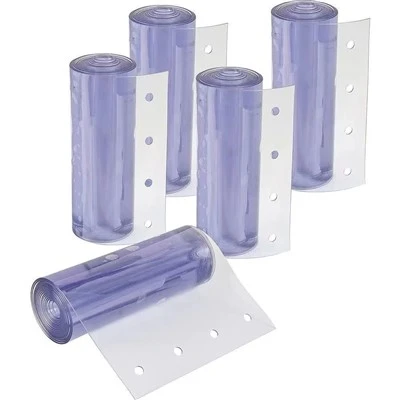
Don’t hesitate to reach out to our team to discuss your kitchenware packaging challenges. We’ll provide samples, technical specs, and guidance on which PVC film type will work best for your products. Whether you’re a small startup just launching your first line of spatulas or a large cookware brand expanding to new retailers, we have the expertise to support you.
PVC Tablemat References
- European Council of Vinyl Manufacturers. (2023). PVC Packaging Applications: Technical Performance and Sustainability.
- Food and Drug Administration. (2022). Guidance for Industry: Substances Added to Food Contact Materials, Including PVC.
- Plastics Industry Association. (2024). Flexible and Rigid PVC Films in Consumer Goods Packaging.
- Journal of Packaging Science and Technology. (2023). Barrier Properties of PVC Films for Humidity-Sensitive Kitchenware Products.
- Sustainable Packaging Coalition. (2023). Material Efficiency Comparison of PVC vs. Alternative Plastics for Retail Packaging.
Suzhou East New Material Technology Co., Ltd.
As one of the most professional PVC film manufacturers and suppliers in China, we also support customized service. Please feel free to buy discount PVC film in stock here and get pricelist from our factory. For price consultation, contact us.
Address: BLD NO.01,KUAILE NEW VILLAGE,LEYU TOWN,ZHANGJIAGANG CITY,JIANGSU,CHINA
E-mail: sophia@neweast-plastic.net
WebSite: https://www.op-plastic.com/
