Hey everyone, if you’ve ever replaced a worn-out rubber bushing on your car, a industrial conveyor, or even a farm tractor, you know it’s way more than just a little rubber part. I’m the owner of a small rubber bushing supplier, and I talk to mechanics, plant managers, and even weekend gearheads every single day who ask the same thing: does the size of these bushings really matter that much? Spoiler alert—yeah, it does. Not just a little, either. I’ve seen too many folks grab the first bushing that fits their mount without thinking about the size, and that almost always leads to bigger problems down the line. Let’s break this down like we’re chatting over coffee, no stuffy engineering jargon, just real stuff that actually impacts your setup. Rubber Bushing
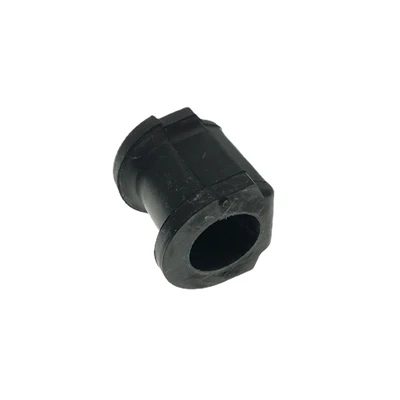
First off, let’s keep it basic: a rubber bushing is that soft, rubber donut (or sometimes a cylinder) that sits between two metal parts. It absorbs vibration, cuts down noise, and keeps those metal pieces from banging into each other. But when we talk size here, I’m not just talking about “does it fit the hole”—I’m talking about outer diameter (OD), inner diameter (ID), wall thickness, and overall length. Those four numbers are where the magic (or the mess) happens. A lot of people mix up fit and function, and that’s where mistakes get made. I once had a guy bring me a set of bushings he’d ordered online for his work truck; they fit the exact mount, but they were 10mm thinner wall than the original. By the end of the first work shift, the bushings were cracked, the vibration was shaking his steering wheel so bad he could barely hold it, and he ended up paying twice to fix it. That’s not an isolated story, either—we’ve been supplying bushings for over a decade, and this sort of thing comes up weekly.
Let’s start with wall thickness, because that’s the part most people gloss over. Wall thickness is the rubber between the inner metal core and the outer metal sleeve, right? If you have a thin wall (say, 3mm or less), the bushing will flex way too much under load. If you’re using it on a heavy-duty machine, like a hydraulic press mount, that flex turns into movement—bad movement. The metal parts will shift, the vibration will amplify, and the bushing will wear out in months instead of years. But if you go too thick, like over 10mm, you get another problem: stiffness. Too much rubber means the bushing can’t flex when it needs to, so you’re back to metal-on-metal banging, which kills the whole point of the bushing. We’ve got a formula for this that we share with every customer, but basically: wall thickness needs to match the load it’s handling. For passenger car bushings, you’re looking at 4-6mm; for heavy industrial stuff, 7-9mm. Ignore that, and you’re just throwing money at a part that won’t work.
Next, outer diameter (OD) and inner diameter (ID) might seem simple, but they’re tied directly to load distribution. The ID is the hole for the bolt, the OD is how big the bushing is around the outside. Let’s use a car example first—say you’re replacing control arm bushings. If you go with an OD that’s too small for the mount, the bushing can’t spread the load across the entire metal housing. All the force from hitting a pothole or curbing will focus on a tiny spot on the rubber, causing it to tear or separate from the metal sleeves. We had a customer last year who tried to save $5 on a smaller OD bushing for his pickup’s front end; six months later, the bushing blew out, and he had to replace the control arm and alignment, costing him $800. On the flip side, an OD that’s too big won’t fit, obviously, but some people force it—don’t do that. That crushes the rubber, makes it hard, and it’ll crack before you even drive the truck home.
Overall length of the bushing is another big one that people sleep on. The length is how thick the bushing is along the bolt axis. A short bushing might fit, but it doesn’t have enough rubber surface area to handle side-to-side movement. Think of a conveyor belt roller mount—if the bushing is too short, when the roller turns, it twists the side of the bushing, not the whole thing, leading to uneven wear. Long story short, shorter bushings need to be stiffer, longer bushings can be a bit more flexible, but mixing lengths wrong = uneven wear, early failure.
Now, let’s talk about why this matters for you, whether you’re a mechanic, a plant manager, or a guy working on his old farm tractor. I get it, cost is a factor. But cutting corners on bushing size isn’t saving money—it’s costing you downtime, repairs, and even safety. On a heavy truck, a bad bushing can cause steering wobble, which is dangerous on the highway. On a factory conveyor, a failed bushing can shut down a whole production line, costing thousands an hour. We supply a lot of small manufacturers who used to buy cheap, generic bushings; they switched to the right size for their load, and their downtime dropped by 70% within a year. That’s not a number I made up—we track that for every repeat customer.
Wait, let’s clear up a common myth too. A lot of people think “bigger is always better.” That’s only half true. If you have a 1-ton load, a bushing that’s too big will be too stiff, right? But if your load is 500lbs, a bushing that’s too small will flex too much. It’s all proportional. We test every batch of bushings we make in our shop—we put them through vibration tests, load tests, even extreme temperature tests (we’ve got a freezer that goes to -40F and an oven that hits 180F, just for testing). Last month, a customer brought us a bushing he’d bought for a refrigerated truck mount; he’d used a standard size, but the cold was making the rubber too stiff, so it failed. We swapped him to a bushing with a slightly thicker ID core, and that fixed the stiffness without making the wall too thin. Small size adjustment, big difference in performance.
Another thing: compression set, which is the rubber’s ability to bounce back after being squashed. The size of the bushing directly affects compression set. If you have a bushing that’s too small for the load, it compresses more than it should, and over time, the rubber stays squashed—permanently. That means the bushing stops absorbing vibration, and you’re back to metal-on-metal. We had a customer who used the wrong size bushing on a printing press; after six months, the bushing was compressed so much it was half its original size, and the printer had misaligned pages every time it ran. Swapping to the correct size fixed that overnight.
What about applications where movement is needed, like a swing set or a patio awning? Bushing size here is about how much movement you want. A thinner wall, smaller OD bushing will let the awning swing more easily, but it might not hold up in wind. A thicker wall, larger OD will be sturdier, but the swing will be slower. Again, it’s matching the size to the purpose. I built my own patio awning a few years back, and I made the mistake of using a too-small bushing for the pivot; in a storm, the awning swung so hard it broke the rod. Lesson learned— I swapped to the right size, and it’s held up through three hurricanes now.
Let’s also talk about wear and tear from repeated movement. Every time two metal parts move against each other, the bushing rubs, wears, and heats up. The size of the bushing determines how much surface area is there to handle that friction. A bushing that’s too small has less surface area, so it wears faster. A bushing that’s the right size has enough rubber to dissipate heat, so it lasts longer. We tell customers to check their bushings every oil change (for cars) or every 6 months (for industrial machines) — if you see cracking or squishing, it’s not just time to replace it, it’s time to check if the size was right in the first place.
So where does that leave you? If you’re picking a rubber bushing, don’t just go by the part number or “fits the hole.” Ask yourself: what’s the load it’s handling? What’s the movement it needs to absorb? What’s the temperature it’s going to be in? Those answers will tell you what size you need. If you’re not sure, that’s what we’re here for—we’ve got guys on our team who have 20+ years in rubber bushings, and we can walk you through exactly what size works for your setup, no fancy lingo, just straight talk.
I see too many people treat rubber bushings like a afterthought, but they’re one of the most important parts of any machine or vehicle. Get the size wrong, and you’re dealing with headaches, downtime, and extra costs. Get it right, and your machine will run smoother, last longer, and save you money in the long run.

If you’re tired of bushings that wear out too fast, or you’re not sure what size works for your project, reach out. We don’t do hard sell here—we’d rather you get a bushing that works than make a quick buck off the wrong part. We’ve got standard sizes for most common applications, and we can make custom sizes if you need something specific. Just send us the details, and we’ll hook you up with the right fit for your needs.
Rubber Bushing Reference:
- ASTM International. Standard Test Method for Rubber Property—Compression Set. ASTM D395, 2022.
- Society of Automotive Engineers. Rubber Bushing Performance Requirements for Highway Vehicles. SAE J1467, 2019.
- Industrial Rubber Products Association. Design Guidelines for Rubber Bushing Applications. IRPA Publication 12, 2021.
Anhui Anling Rubber & Plastic Co., Ltd.
We are one of the most professional rubber bushing manufacturers and suppliers in China, featured by quality products and good service. Please rest assured to wholesale bulk rubber bushing in stock here and get quotation from our factory. We also accept customized orders.
Address: 3.9-Square-Kilometer Industrial Park in the Development Zone, Anqing City, Anhui Province
E-mail: anhuianling@126.com
WebSite: https://www.anhuianling.com/
