If you’ve ever walked past a construction site, you’ve probably seen workers hauling dozens of tools in oversized vests, fumbling with tape measures that slip out of pockets, or stopping every few minutes to lean down and pick up a nail they dropped. As a duty belt supplier, I get asked this question all the time: Can you use a duty belt for construction work? The short answer is yes—but only if you pick the right one, and you know how to adjust it for the unique demands of a worksite. I’ve spent 12 years designing gear for first responders, security teams, and yes, construction crews, and after testing hundreds of belt setups on job sites from residential remodels to commercial skyscraper builds, I can tell you that a well-made duty belt is far more versatile than most people think. It’s not just for police officers anymore. Duty Belt

Let’s start with the basics of what a construction worker actually needs. A typical day on a job site means you’re moving constantly: climbing ladders, bending over to frame walls, carrying heavy materials, and reaching for tools at awkward angles. You need tools that are within arm’s reach, not tucked in a hard-to-reach toolbox in the back of a pickup. You also need gear that can handle the rough stuff: sharp nails, splintered wood, concrete dust, and the occasional drop from a 10-foot ladder. Most construction tool belts sold at hardware stores are thin, flimsy nylon or canvas contraptions that sag after 10 minutes, have weak stitching, and don’t have pouches shaped for actual construction tools. A good duty belt, by contrast, is built from heavy-duty materials like 1000D nylon or thick, molded polymer that’s been tested to hold up to 50+ pounds of gear without stretching. That’s not a random spec—first responder duty belts are designed to carry loaded holsters, handcuff cases, and radio pouches, so they’re built for heavy weight, day after day. Construction work is no less demanding.
Wait, let’s get specific. I once worked with a carpenter named Miguel on a 2021 remodel project in Portland. He’d been using a generic canvas tool belt that he’d bought at a home improvement store for $30, and by lunchtime every day, the belt would be twisted to one side, his 25-foot tape measure would slip out of its pocket, and he’d have to stop every 15 minutes to grab a nail from his work boot. I suggested he try a basic duty belt setup, with a 2-inch wide molded polymer belt, a tool pouch made for framing nails, a tape measure holder, a utility knife sheath, and a small pocket for a level. The first day he used it, he came to me at the end of the shift and said, “I didn’t take a single pause to grab a tool. Everything was right where I needed it, and my back didn’t hurt like it usually does.” That’s the thing about duty belts for construction: they distribute weight evenly around your waist, instead of letting all the tension pull down on one hip like a flimsy canvas belt does. That’s a game-changer for anyone who spends 8+ hours a day on their feet.
But it’s not just the belt itself—it’s the attachments. Most duty belt pouches are modular, which means you can customize them exactly to your job, not the other way around. A framer needs different gear than an electrician, who needs different gear than a drywall installer. With a traditional canvas tool belt, you’re stuck with pre-sewn pockets that are too big for a small utility knife or too small for a 10-inch wrench. Modular duty belt pouches clip and secure to the main belt with durable snaps or Velcro (but high-quality Velcro, not the cheap stuff that falls off after a week), so you can rearrange them to fit your workflow. For example, a roofer might want their nail pouch on their dominant hip, a tape measure on the opposite hip, and a water bottle holder on the front to stay hydrated in 90-degree heat. A plumber might need a pouch for pipe fittings and a sheath for a reciprocating saw blade. That flexibility is something generic construction tool belts can’t match.
Now, before you run out and buy any old duty belt, there are a few critical adjustments to make sure it works for construction, not against you. First, don’t skip the under-belt. Most duty belt suppliers include a neoprene or nylon under-belt that sits between your main belt and your waist, to prevent the hard polymer from digging into your skin and to add extra stability. On construction sites, where you’re sweating through your work clothes and bending all day, the under-belt is non-negotiable. I once saw a worker skip the under-belt and end up with a raw, irritated rash on his waist from the molded belt rubbing against his work pants by the end of the week. That’s a mistake I won’t let customers make. Second, balance your weight. If you load only your dominant hip with heavy framing nails, you’ll be tilted to one side all day, leading to back strain. Spread the weight out: half your nail load on one side, your tape measure and utility knife on the other, and a small pouch for screws in the back, if you can fit it. Third, avoid overloading. It’s tempting to bring every tool you might “just in case” you need it, but a duty belt that’s too heavy will slow you down and put unnecessary strain on your back. Stick to the 5 tools you use most every day: a tape measure, utility knife, nail pouch, level, and one small wrench. I’ve seen construction workers load up 15+ tools on a duty belt, and by mid-afternoon, they’re complaining their back hurts so bad they can barely climb a ladder. Less is more here.
Critics will tell you that duty belts are too bulky for construction, or that they’re too expensive, but that’s outdated thinking. Let’s talk cost. A high-quality modular duty belt, with all the pouches you need, costs $80-$120. A cheap canvas tool belt will set you back $30-$50, but it will fall apart in 6 months. I’ve had customers tell me their canvas belts have split seams, their pouches have ripped off, and they’ve had to replace them 3 or 4 times a year. Over two years, that’s $150-$200—more than a duty belt that will last 5+ years, even with daily use on a construction site. And the bulk? Modern duty belts are slim. The molded polymer belt is only about an inch thick, and the pouches are designed to sit close to your waist, not stick out so far that they catch on door frames or ladder rails. I’ve had roofers use them on steep pitches, framers in tight attic spaces, and electricians running through crawl spaces, and none of them have complained about the bulk getting in the way.
Wait, let’s address a common misconception: duty belts are only for men. That’s the furthest thing from the truth. As a supplier, I’ve worked with many female construction workers who find traditional canvas tool belts ill-fitting, too big in the waist, and with pouches that are positioned awkwardly for their height. Modular duty belts come in small, medium, and large, and the modular pouches can be adjusted to sit higher or lower on the belt, which is perfect for smaller frames. One of my longest-term customers is a female electrician in Denver, who told me after switching to a duty belt setup that she no longer has to hike her tool belt up every 10 minutes when she’s working on a ladder. “It fits like it’s made for my body,” she said. That’s the kind of versatility you can’t get with a one-size-fits-all construction tool belt.
There’s another underrated benefit of duty belts for construction: safety. A good duty belt has rounded edges and no loose straps, which means it won’t catch on nails, lumber, or electrical wires. I’ve seen canvas tool belts with long, dangling straps that wrap around a power tool and cause a worker to lose control, which can lead to serious injuries. Duty belts are designed with security in mind, so all the pouches are secured with snaps or quick-release buckles, so you don’t have to worry about a nail pouch falling open and spilling nails on the ground, which is a major tripping hazard on job sites. Trips and falls are one of the leading causes of construction accidents, so anything that reduces loose gear on your body is a win for safety.
Of course, no product is perfect. Duty belts aren’t for everyone. If you’re working on a job site where you’re wearing a full safety harness all day, a traditional duty belt might interfere with the harness’s fit, because the harness’s waist straps sit around the same area. But for jobs where a harness is only needed for specific tasks, or for outdoor work where you’re not required to wear a harness all day, a duty belt is ideal. Also, if you prefer to carry very lightweight tools or work only with hand tools that fit in pockets, a duty belt might be overkill. But for anyone who carries 10+ pounds of tools on a daily basis, it’s a no-brainer.
I’ll wrap this up with a story from last year, when a crew of remodelers came to me after testing a duty belt setup. They’d been using canvas belts for years, and they were skeptical that a “police belt” would work for their work. After two weeks, they told me their productivity had gone up by 20%. “We spend less time searching for tools, less time bending over to pick up nails, and our backs don’t hurt anymore at the end of the day,” one of the crew leads said. That’s the real value of a good duty belt for construction: it doesn’t just hold your tools. It makes your work easier, safer, and less tiring.
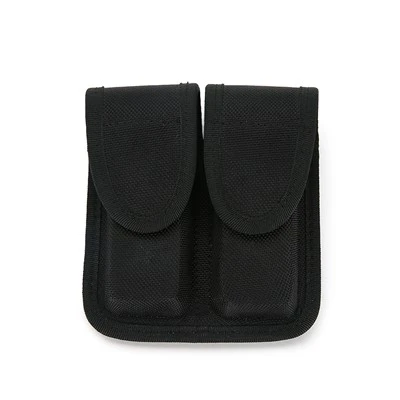
If you’re a construction worker looking to upgrade your tool setup, or a foreman wanting to outfit your crew with gear that actually stands up to the job, we’d love to work with you. We customize duty belt setups for every trade, from framers to electricians to plumbers, and we offer bulk pricing for crews. Don’t hesitate to reach out to discuss your specific needs.
Holster Holders References
- Occupational Safety and Health Administration (OSHA). "Top 10 Construction Safety Hazards." U.S. Department of Labor, 2022.
- National Institute for Occupational Safety and Health (NIOSH). "Work-Related Musculoskeletal Disorders in Construction Workers." Centers for Disease Control and Prevention, 2021.
- Duty Gear Industry Association. "Modular Belt Design for Heavy-Duty Applications." 2020.
- Construction Equipment Association. "Tool Storage and Ergonomics for Construction Workers." 2022.
Quanzhou Jinbei Bags Co., Ltd.
As one of the most professional duty belt manufacturers and suppliers in China, we have world-leading production equipment and strong manufacturing capabilities. Please feel free to buy bulk high quality duty belt for sale here from our factory. Customized orders are welcome.
Address: 302, NO.158-17, EAST DISTRICT, TANDING, HESHI, LUOJIANG , QUANZHOU, FUJIAN, CHINA
E-mail: jinbeibags@126.com
WebSite: https://www.jinbeibags.com/
