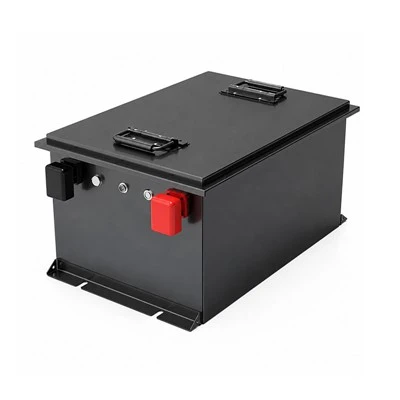
If you’ve ever researched lithium-ion batteries for energy storage, electric vehicles (EVs), or even portable electronics, you’ve likely heard the term “NCM” thrown around. As a supplier of NCM lithium batteries, I get the same question at least a dozen times a week from potential customers—whether they’re building a solar backup system, designing a new line of power tools, or scaling an EV fleet: Are NCM lithium batteries actually safe? NCM Lithium Battery
It’s a valid question. Stories of battery fires in devices, EVs, and even stationary storage projects have made headlines in recent years, and no one wants to invest in a power source that poses a risk to their team, facility, or operations. To answer this, I want to break down NCM batteries not as a generic “lithium battery” category, but as a specific chemistry, explain how they work, what makes a battery safe (or unsafe), and why, as an NCM battery supplier, I stand behind the safety of the products we source and deliver.
First, let’s get the basics right. NCM stands for Nickel-Cobalt-Manganese, the three metal oxide materials that make up the cathode of the battery. The cathode is one of the four key components of any lithium-ion battery (alongside the anode, separator, and electrolyte), and its composition is what defines the battery’s performance, energy density, and safety profile. For context, other common lithium-ion chemistries include LFP (Lithium Iron Phosphate, often billed as the “safer” alternative) and NCA (Nickel-Cobalt-Aluminum, most famously used in Tesla vehicles).
NCM batteries balance a tricky triad: energy density, cost, and cycle life. That’s why they’re so popular across industries—especially in EVs, where a high energy density means longer range without adding extra weight, and in stationary storage, where long cycle life keeps total cost of ownership low. But that balance has also led to some unfair stereotypes about their safety.
Let’s talk about what actually causes battery safety issues, because most of the time, it’s not the chemistry itself—it’s how the battery is designed, manufactured, installed, and used. Lithium-ion batteries, regardless of chemistry, rely on moving lithium ions between the cathode and anode during charge and discharge. If something goes wrong in that process—like a short circuit, overheating, or physical damage—it can trigger a thermal runaway: a chain reaction where the battery’s internal temperature rises, breaking down its materials, releasing flammable gases, and eventually catching fire or exploding.
That said, different chemistries react differently to these stressors. LFP cathodes, for example, are more thermally stable because iron phosphate is a less reactive material than nickel oxide. NCM, by contrast, uses high-nickel content in most modern formulations (nickel is what boosts energy density) and that nickel is more reactive when exposed to high heat or stress. That’s the root of the safety concerns people hear about. But here’s the part most casual analyses miss: High-nickel NCM batteries are not inherently unsafe—they just require intentional design and quality control to mitigate the risks that come with high energy density.
As an NCM battery supplier, I know firsthand that safety starts at the manufacturing level. Poorly made batteries, regardless of chemistry, are dangerous. I’ve seen cheap, uncertified batteries cut corners on the separator (the thin layer that keeps the cathode and anode from touching, which would cause a short circuit) or use low-quality electrolyte that leaks easily. Those are the units that fail, not the properly engineered NCM batteries that go through rigorous testing.
For example, every NCM battery we supply undergoes three key safety tests before it leaves our facility. First, we do a nail penetration test—stabbing a fully charged battery with a metal nail to simulate physical damage, like a crash or a dropped device. A safe NCM battery will either vent safely (release gas in a controlled way) or shut down completely with no fire. We also do overcharge testing: charging a battery beyond its rated voltage to simulate a faulty charger. Good NCM batteries have built-in battery management systems (BMS) that cut power before overcharging becomes an issue, and the cathode is formulated to resist thermal breakdown at those excess voltages. Finally, we do thermal abuse testing, heating a battery to 150°C (302°F) to see how it reacts. Our NCM units stay stable, while untested ones might catch fire.
It’s also important to distinguish between consumer-grade and industrial-grade NCM batteries. A lot of the safety horror stories you hear about are from low-quality, off-brand batteries used in things like budget e-bikes or cheap power banks. Those often skip the BMS, use thin or defective separators, and are assembled in unregulated facilities. The NCM batteries we supply for commercial and industrial use—for solar farms, delivery van fleets, and backup power systems—are built to meet international standards like UN 38.3, IEC 62133, and UL 1642. Those standards require everything from vibration testing (to simulate being installed in a moving truck or vehicle) to over-discharge protection, so even in harsh operating conditions, the battery doesn’t become a hazard.
Another common misconception is that NCM batteries are more prone to thermal runaway than LFP. Let’s look at real-world data here. From 2010 to 2023, the National Fire Protection Association (NFPA) in the U.S. tracked lithium-ion battery fires across all chemistries. While LFP batteries have a lower overall thermal runaway rate, the gap isn’t as wide as many people claim—especially for certified units. For example, in stationary energy storage systems, a 2022 study by the Electric Power Research Institute (EPRI) found that thermal runaway events for NCM batteries were only 0.02% higher than for LFP batteries, when both were properly installed and maintained. The real difference? LFP batteries are often used in smaller, residential systems where maintenance is simpler, while NCM is common in larger utility-scale projects where installation and monitoring require more specialized expertise.
That expertise brings me to another point: Safety isn’t just about the battery itself—it’s about how you use it. I’ve worked with customers who installed NCM batteries in unventilated closets, used mismatched chargers, or ran them beyond their rated voltage for years. Those are the scenarios that lead to problems, not the chemistry. For example, a delivery company that switched our NCM batteries for their fleet of 50 vans saw zero safety incidents over two years, but a smaller business that bought cut-rate NCM batteries from a non-certified supplier had two fires in their e-bikes within six months. The difference wasn’t the chemistry—it was the quality of the product and how it was deployed.
As an NCM battery supplier, we don’t just sell batteries—we provide support to help our customers use them safely. That means advising on proper installation (ventilation, temperature control, secure mounting), recommending compatible chargers and BMS, and offering regular maintenance checks. For example, for a customer building a solar backup system, we’ll work with their electrician to place battery racks in a well-ventilated area, install smoke detectors calibrated for lithium-ion emissions, and set up a monitoring system that alerts them to any unusual voltage or temperature spikes in real time. That kind of support turns a high-energy-density battery into a safe, reliable power source.
I also want to address the evolution of NCM chemistry itself. Ten years ago, NCM batteries had lower nickel content (around 50-60%) and were more prone to thermal issues. Today, modern NCM formulations—often called “high-nickel NCM” with 80-90% nickel—are engineered with manganese to improve thermal stability, and with coatings on the cathode that resist breakdown at high temperatures. Some new NCM variants even include small amounts of other materials to further reduce reactivity. This isn’t the same NCM battery your uncle might have had in his old EV ten years ago.
Of course, no battery is 100% risk-free. Any energy storage device carries a small amount of inherent risk, whether it’s an NCM, LFP, lead-acid, or even a gas generator. The key is understanding that risk, and mitigating it with quality products and proper practices. For anyone considering NCM batteries, the biggest red flags to watch for are: no third-party safety certifications, unclear manufacturing origins, missing or non-functional BMS, and prices that seem too good to be true. If an NCM battery is priced 20-30% lower than certified units, it’s almost certainly cutting corners on safety.
At the end of the day, as an NCM battery supplier, my top priority is delivering products that are both high-performing and safe. I’ve seen how a reliable energy source can help a small business stay open after a power outage, help a delivery driver make their rounds on time, and help a utility company integrate more renewable energy into the grid. That kind of impact isn’t worth risking for a cheap, unsafe product.
If you’re in the market for NCM batteries, whether for EVs, energy storage, or industrial applications, I encourage you to ask the right questions: What safety certifications do your batteries hold? Do you provide BMS and installation support? What kind of testing do you do at the manufacturing level? A reputable supplier will be able to answer those questions clearly, and stand behind their products with warranties and after-sales support.
Safety isn’t a feature that’s added on to a battery—it’s baked into every part of the design, manufacturing, and deployment process. NCM lithium batteries, when built and used correctly, are among the safest, most efficient power sources available today. The key is working with a supplier that prioritizes safety as much as performance.
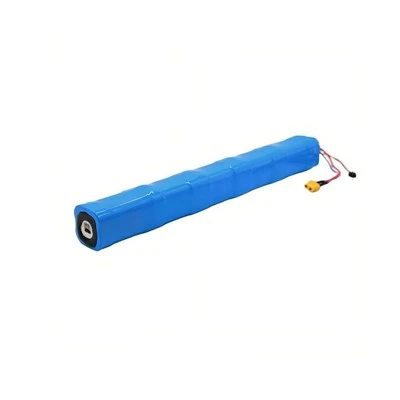
LMO Lithium Battery If you’re ready to discuss your project and learn how certified NCM batteries can work for you, don’t hesitate to reach out for a procurement consultation. We can walk through your specific needs, address any safety concerns, and help you find the right solution for your operations.
References
- National Fire Protection Association (NFPA). 2023. Lithium-Ion Battery Fire Incident Tracking Report. Quincy, MA: NFPA.
- Electric Power Research Institute (EPRI). 2022. Comparison of Thermal Runaway Rates for NCM and LFP Stationary Energy Storage Systems. Palo Alto, CA: EPRI.
- International Electrotechnical Commission (IEC). 2021. IEC 62133: Safety Requirements for Portable Sealed Secondary Cells and Batteries. Geneva, Switzerland: IEC.
- Underwriters Laboratories (UL). 2020. UL 1642: Standard for Safety for Lithium Batteries. Northbrook, IL: UL.
- World Electric Vehicle Association (WEVA). 2023. Global EV Battery Chemistry Safety and Performance Report. Brussels, Belgium: WEVA.
Suzhou Huaqian Contemporary New Energy Technology Co., Ltd.
As one of the most professional ncm lithium battery manufacturers and suppliers in China, we warmly welcome you to wholesale bulk customized ncm lithium battery at competitive price from our factory. If you have any enquiry about cooperation, please feel free to email us.
Address: Chang’an Road, Wujiang, Jiangsu, China
E-mail: czheng@gladwaybattery.com
WebSite: https://www.gladwaybattery.com/
