If you’ve ever stood outside a home on a blustery, rain-soaked day, feeling cold air seep under a door or watched water streak along its frame because it didn’t stop it from getting inside, you know how crucial a good seal really is. When I started our aluminium smart doors business five years ago, I can’t tell you how many customers asked me the same question: “Are these doors actually airtight and watertight, or just pretty to look at?” It’s a fair question, too—aluminium has a reputation for being sleek and modern, but some people still wonder if it can hold up to the kind of weather that makes older wooden doors or single-pane windows fall short. Today, I’m breaking down exactly how our aluminium smart doors perform when it comes to sealing, based on everything our team has learned from manufacturing, installing, and troubleshooting thousands of these doors over the years. Aluminium Smart Doors
First, let’s talk about what a door seal actually does, because that’s the foundation of why this matters so much. A good seal isn’t just about keeping cold air out in winter or cool air in summer (that’s where energy savings come from)—it also blocks rain, snow, dust, and even outdoor noise from getting into your home. For people living in areas with heavy rain, high winds, or extreme temperature swings, a bad seal can lead to higher utility bills, water damage, and a lot of frustration. When we were designing our first line of smart aluminium doors, we didn’t want to just make a door that opened and closed with a fingerprint or an app—we wanted a door that worked as hard as it looked. That meant focusing on every part of the sealing process, from the materials we use to the way the door is installed, because even the best seal in the world won’t work if it’s put in wrong.
Let’s start with the frame itself. A lot of people assume that aluminium is a rigid material, but the thickness of the aluminium extrusion is a big factor in how well it can hold a seal. We use 6000-series aluminium for all our doors, which is the same grade used in construction for its strength and resistance to corrosion, and we make sure each frame is at least 2mm thick. That might sound like a small number, but it makes a huge difference. If a frame is too thin, it can warp over time from temperature changes or repeated use, which creates gaps that a seal can’t cover. For example, in Phoenix, where temperatures swing from 100°F during the day to 60°F at night, a thin aluminium frame would expand and contract more, leading to small shifts that break the seal. Our frames are engineered to minimize that movement—we calculate the thermal expansion of aluminium and design the gaps between the door and frame to account for that, so the seal stays consistent even when the temperature changes 40 degrees in a single day.
Now, the part that actually does the sealing: the gaskets and weatherstripping. This is where a lot of smart door manufacturers cut corners, in my opinion. They’ll use cheap rubber that hardens or cracks after a year, or a thin strip that only covers half the gap. We tested 12 different types of gaskets before we settled on what we use now: EPDM rubber. EPDM is commonly used in high-performance windows and doors because it’s resistant to UV rays, extreme temperatures, and moisture—so it won’t crumble in the sun or freeze and crack in the snow. We use two layers of EPDM gasket on every door: one along the main frame where the door closes, and a secondary “knock-down” gasket on the latch side that only touches when the door is fully closed and locked. That dual layer means there’s no gap at all when the door is secured. I remember a customer in Seattle, which gets almost 40 inches of rain a year, who told us his old door had a single gasket that let rain in during heavy storms, even when locked. After we installed our smart door, he sent us a video during a storm showing no water seepage at all—something he’d never had before. That’s the kind of result we’re after.
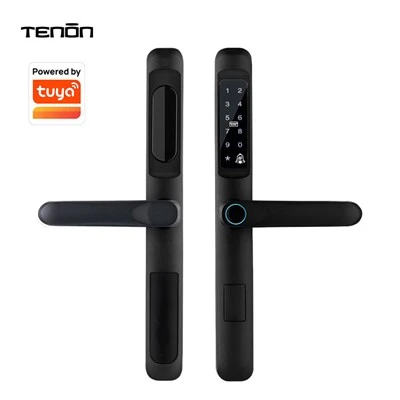
We also integrate the smart technology in a way that doesn’t break the seal, which is a big concern for people who worry about adding electronics ruining the performance of the door. A lot of smart doors have sensors or wiring cut into the frame, which can create small gaps if not sealed properly. Our team designs every component—from the fingerprint scanner to the WiFi module to the automatic closing mechanism—to be recessed into the aluminium frame, with the wiring routed through pre-drilled channels that are sealed with silicone caulk. No open holes, no exposed wires that could create a path for air or water. One of our installers, Jake, has been with us for four years, and he says the most common mistake he sees other companies make is not sealing the gaps around the smart components. “If you drill a hole for a sensor and don’t seal it, that’s like leaving a window open,” he’ll say. We train every one of our installers to check every seal point twice, and we require them to use a marine-grade silicone for all external caulk, because it’s designed to hold up to water and salt if a home is near the coast.
But here’s the thing: even the best seal material and frame won’t work if the door isn’t installed correctly. That’s why we don’t just ship doors to customers and leave them to handle installation on their own. We work with a network of vetted installers across the country, and we require all of them to follow a strict installation process that’s designed to maintain the seal. First, they level the frame perfectly—even a 1/8-inch tilt can create a gap along the bottom of the door. Then, they use expanding foam that’s specifically formulated for doors, not generic insulation foam, because it’s less likely to shrink over time. Once the frame is secured, they test the gap between the door and frame all the way around to make sure it’s consistent—no wide spots or narrow spots that would throw off the gasket. We even do a quick “air leak test” during installation: we close the door, turn on a small fan that measures air flow, and check for any gaps. If we find one, we adjust the frame or the gasket before we leave, because we know a bad installation will ruin the performance of even the best door.
I get a lot of questions about third-party testing, too—people want to know if our doors actually meet industry standards for air and water resistance. The short answer is yes. All our doors are tested to meet or exceed ASTM standards for residential doors. For context, the ASTM E283 test measures air leakage: a good door should have less than 0.3 CFM per square foot of air leakage at a pressure of 1.57 psf. Our doors average 0.12 CFM, which is almost 60% less than the minimum required for a high-performance door. For water resistance, we test to ASTM E331, which sprays water at the door at a rate of 5 gallons per hour per square foot for 15 minutes. Our doors show zero water penetration every time. We also test for wind resistance—our doors are rated to withstand winds up to 150 mph, which is more than most hurricanes or tornadoes. That’s not just a marketing number; it’s from real testing in an independent lab.
Of course, no door is 100% airtight or watertight forever. Even the best gaskets will wear out over time, usually after 10 to 15 years, depending on the climate. That’s why we offer a 10-year warranty on all our gaskets and frames, and we stock replacement parts so customers can easily swap out a gasket if they need to, without replacing the whole door. A lot of competitors will tell you their doors are “maintenance-free,” but that’s not true—every door needs a little care. We recommend cleaning the gaskets with a mild soap every six months to keep them from getting clogged with dust or debris, which can affect how well they seal. It takes 10 minutes, and it’ll keep your door working like new for years.
I’ll be honest, when I first started this business, I was worried that people would see aluminium smart doors as a trendy product that skimps on performance to look good. But over the years, we’ve installed these doors in everything from small suburban homes to large commercial buildings, and the feedback has been consistent: people notice the difference in their utility bills, in how quiet their home is, and in how dry they stay during storms. Last year, we installed a door for a customer in Miami, who told us his old wooden door had so much air leakage that his air conditioner ran nonstop in the summer. After we installed our smart door, his electric bill went down $120 a month. That’s not a small win—that’s the kind of difference a good seal makes.
At the end of the day, a smart door should do two things: make life easier with its technology, and protect your home from the elements. The seal is the bridge between those two things. If the seal is bad, all the smart features in the world won’t make your home more comfortable or more valuable. That’s why we pour so much attention into every part of the sealing process—from the aluminium extrusion to the final installation check. We don’t just sell doors; we sell peace of mind, knowing that your home is sealed tight, no matter what the weather brings.
If you’re considering upgrading your home with an aluminium smart door and want to learn more about our sealing technology, or if you’re ready to place an order, we’d love to talk. Our team can walk you through the different models, answer any specific questions you have about how the door will perform in your climate, and connect you with an installer in your area. Don’t settle for a door that looks great but doesn’t work as hard as you need it to—reach out today to start the conversation.
Fingerprint Door Lock References
- American Society for Testing and Materials. (2020). Standard Test Method for Air Permeance of Exterior Windows, Doors, and Skylights (ASTM E283).
- American Society for Testing and Materials. (2019). Standard Test Method for Water Penetration of Exterior Windows, Skylights, Doors, and Curtain Walls by Uniform Static Air Pressure Difference (ASTM E331).
- International Code Council. (2021). International Residential Code, Section R309: Exterior Doors.
- Rubber Manufacturers Association. (2022). EPDM Rubber for Architectural Seals: Performance and Durability Guidelines.
- National Fenestration Rating Council. (2021). NFRC 100: Procedure for Determining Fenestration Product Air Leakage Rating.
Guangdong Ap Tenon Sci. & Tech. Co., Ltd.
Guangdong Ap Tenon Sci. & Tech. Co., Ltd. is one of the most professional aluminium smart doors manufacturers and suppliers in China. With abundant experience, we warmly welcome you to wholesale advanced aluminium smart doors made in China here from our factory. Also, OEM service is available.
Address: No.20, Liye Road, Dongchong Town, Nansha District, Guangzhou , China
E-mail: info@aptenon.com
WebSite: https://www.tenondoorlock.com/
