When I first started working as an aluminum wall panels supplier 12 years ago, a common question from architects and contractors would stop me in my tracks every time: “Do aluminum wall panels actually work for exterior cladding?” Back then, the conversation usually veered toward metal’s reputation for being expensive, or a vague worry about durability in harsh weather. Today, that question still comes up, but it’s now paired with requests for hard data—something I’m glad to offer, having seen thousands of our panels go up on everything from small retail storefronts to 40-story office towers across the country. Aluminum Wall Panels
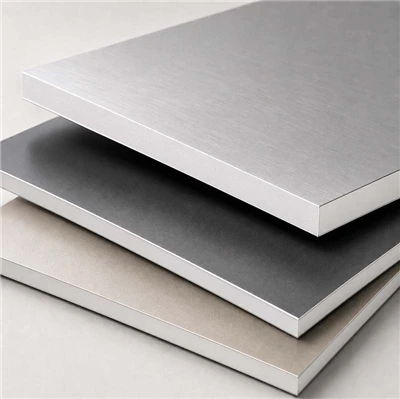
Let’s start with the basics, because exterior cladding isn’t just about looks. It’s a building’s first line of defense against rain, wind, UV rays, temperature swings, and even pollution. Aluminum wall panels are uniquely suited to this role, but not all panels are created equal. Let’s break down the science first. Pure aluminum is soft, but when we add a small amount of magnesium and manganese during manufacturing, we get an alloy that’s 30% stronger than pure aluminum, with better corrosion resistance. That’s why our panels use the 3003 or 5000 series alloys—they’re designed specifically for outdoor use, not indoor trim or decorative elements.
I’ve spent countless hours on job sites watching panels hold up where other materials failed. Three years ago, a contractor in Miami called us in a panic after their competitor’s painted steel panels on a shopping center facade started rusting and peeling just 18 months after installation. Salt air from the coast had eaten through the steel’s primer, leading to unsightly stains and structural weak points. We supplied our 3mm thick aluminum panels with a polyvinylidene fluoride (PVDF) finish, which bonds to the alloy’s surface at the molecular level. Two years later, I visited the site and the panels looked identical to the day they went up. No rust, no fading, no warping. That’s the science of it working.
Durability is one part, but let’s talk about real-world performance in extreme conditions. Last winter, a snowstorm hit a small town in Vermont, dumping 24 inches of wet heavy snow on a new library whose exterior was clad with our aluminum panels. The project architect told me later that other contractors had recommended fiber cement panels, warning that snow would make them crack under the weight. Instead, the aluminum panels flexed slightly to distribute the load, then popped back into place once the snow melted. Aluminum has a high tensile strength-to-weight ratio—meaning it’s strong enough to support loads but lightweight enough to not put excess stress on a building’s structure. That’s a huge advantage over heavier cladding materials like stone or concrete, especially for mid-rise buildings where foundation load limits can be a constraint.
Another point that comes up a lot is UV resistance. Most building materials fade over time, but aluminum’s PVDF finish is tested to retain 90% of its color after 10,000 hours of UV exposure— that’s roughly 10 years of direct sunlight in areas like Arizona or Florida. I can show you photos of a fast food location we supplied in Phoenix that’s 15 years old, and the red panels are still as vibrant as the day they were installed. Compare that to wood, which needs repainting every 3-5 years, or vinyl, which gets brittle and cracks after a decade. The long-term cost savings here add up fast. A friend who runs a commercial property management company told me he spent $45,000 over 10 years maintaining the vinyl cladding on his properties. With our aluminum panels, he’s spent less than $2,000 on minor touch-ups in that same time. That’s a numbers game anyone can get behind.
But it’s not just about durability and cost. Modern aluminum wall panels offer design flexibility that can make a building stand out. A lot of people think cladding is just flat sheets, but we can fabricate panels into curves, grooves, or custom sizes to match any architectural vision. Last year, we worked on a boutique hotel in Santa Fe that wanted a textured, mountain-inspired facade. Our team worked with the architect to create panels with a subtle corrugated finish that mimics the layers of rock in the nearby hills. It wasn’t just for looks— the texture also created small air gaps between the panels and the building’s insulation, which improves energy efficiency by reducing heat transfer. That’s a dual benefit: beautiful design and better performance.
Wait, I know what some of you are thinking: what about installation? I’ve seen botched installations of aluminum panels that make the material look bad, but that’s almost always a training issue, not a material flaw. Our team works with contractors to provide detailed installation guides, on-site training, and technical support every step of the way. Unlike materials that require specialized tools, aluminum panels can be cut and shaped with standard metalworking equipment, which means most experienced facade contractors can install them correctly with the right guidance. I’ve been on a job site where a team finished installing 1,000 square feet of panels in just two days— way faster than the 5 days it would have taken for equivalent stone panels. Faster installation means lower labor costs and less time the building is out of commission, which is a big win for commercial projects.
Of course, no material is perfect, so let’s address the common counterarguments. Some people say aluminum panels are more expensive upfront than vinyl or fiber cement. It’s true— the initial cost is 15-20% higher than those materials, but when you factor in durability, maintenance, and energy efficiency, the lifecycle cost is actually lower. A study from the National Institute of Building Sciences found that aluminum cladding has a 40+ year service life, compared to 20-25 years for vinyl and 30-35 years for fiber cement. Spread that extra cost over 40 years, and it works out to pennies a square foot per year, versus dollars for frequent maintenance on other materials. Another concern: thermal expansion and contraction. Aluminum expands about 13 millimeters per meter for every 10 degrees Celsius temperature change. If panels are installed without proper allowance for movement, they can warp or pull away from the building. But that’s a small detail when installed correctly— our panels come with engineered gap specifications, and we train contractors to account for local temperature ranges. I’ve never seen a properly installed aluminum panel warp in 12 years in the business, and I’ve supplied panels to buildings in climates ranging from Alaska to the Arizona desert.
What about sustainability? That’s a huge topic right now in construction. Aluminum is 100% recyclable, and 75% of all aluminum ever produced is still in use today. When a building reaches the end of its life, aluminum panels can be melted down and reformed into new products with no loss in quality. Compare that to vinyl, which is notoriously hard to recycle, or fiber cement, which often ends up in landfills. At our facility, we recycle 98% of the scrap aluminum from panel fabrication, turning it into ingots that go right back into the production line. That’s a closed loop, and it’s something our clients care about more and more. A school district in Oregon recently chose our panels over composite materials because they wanted a low-waste building that would be easy to deconstruct when the school is eventually replaced.
Let me share a recent example that ties all this together. Last year, we supplied panels for a community center in Detroit. The building had a tight budget, needed to withstand harsh Midwest winters and humid summers, and had a modern design vision. The local architects were initially leaning toward vinyl cladding because of cost, but after presenting lifecycle cost data and showing them photos of 20-year-old aluminum panels in similar climates, they switched. The installation finished on time, the panels have a matte gray finish that matches the city’s industrial heritage, and the building’s energy bills have dropped 18% compared to the old structure that stood there. The center’s director told me last month that they haven’t had to touch the facade since it went up, and that’s exactly what we strive for: a product that does what it’s supposed to, with no headaches.
So going back to the original question: Do aluminum wall panels work for exterior cladding? The short answer is yes, but the longer answer is that they work better than most other options when you consider durability, lifecycle cost, design flexibility, and sustainability. That’s not just sales talk— it’s based on 12 years of seeing these panels perform in real conditions, on real buildings, for real people.

If you’re an architect, contractor, or building owner looking to learn more about how aluminum wall panels can work for your next project, I’m here to help. We offer free site assessments, custom design consultations, and detailed performance data for any climate or building type. Whether you’re working on a small residential addition, a mid-rise apartment complex, or a large commercial structure, we can tailor panels to meet your needs and budget. Reach out to our team to discuss your project, and we’ll walk you through every step— from material selection to installation support to long-term maintenance guidance.
Aluminium Curtain Wall References
National Institute of Building Sciences. (2023). Whole Life-Cycle Cost Analysis for Building Materials.
Aluminum Association. (2022). Exterior Cladding Performance Guidelines for Architectural Alloys.
U.S. Green Building Council. (2021). Sustainable Material Attributes in Commercial Construction.
National Association of Home Builders. (2020). Durability of Exterior Wall Cladding Materials in Extreme Climates.
Zhejiang Ouzhijie Aluminium Co., Ltd.
We are one of the most professional aluminum wall panels manufacturers and suppliers in China, featured by high quality customized products. Please rest assured to wholesale bulk aluminum wall panels for sale here from our factory. Also, quotation is available.
Address: No.277 Shuguang Road,Tudian Industrial Zone,Tongxiang City, Zhejiang Province, China
E-mail: Ada@ozjpanel.com
WebSite: https://www.ozjpanel.com/
