What is a wedge wire screen filter element? If you’ve ever worked in water treatment, mining, food processing, or even oil and gas, you’ve probably relied on filtration systems to separate solids from liquids or gases. But have you ever stopped to wonder what makes those filters so durable, efficient, and long-lasting? That’s where wedge wire screen filter elements come in. As a wedge wire screen supplier, I get asked this question all the time—especially by clients who are tired of flimsy filters that clog too quickly, break down under pressure, or require constant replacement. Today, I’m breaking down exactly what these elements are, how they work, and why they’re such a game-changer for industrial and commercial applications. Wedge Wire Screen
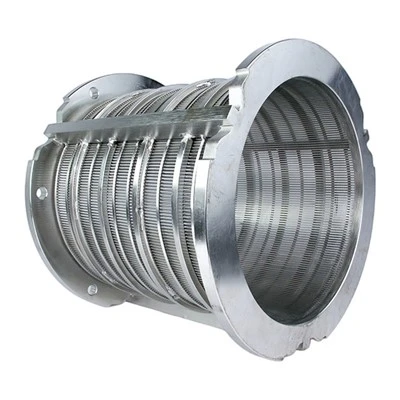
First, let’s start with the basics. A wedge wire screen filter element is a type of industrial filtration component made from individual V-shaped (wedge-shaped) metal wires arranged in a precise, parallel pattern, with the narrow gaps between the wires controlled to within thousandths of an inch. Unlike traditional mesh filters, which are woven from round wires, wedge wire elements are constructed by welding each wire onto support rods at their contact points. This creates a rigid, self-supporting structure that’s capable of withstanding far more pressure than woven mesh—something that’s critical in high-flow, high-load applications.
I’ve been in the wedge wire screen supply business for over a decade, and one of the most common misconceptions I hear is that wedge wire filters are just “another type of metal screen.” But that couldn’t be further from the truth. The geometry of the wedge-shaped wires is what sets them apart. The apex of the wedge is the outer surface of the screen, where the gap is smallest, while the base of the wedge is wider, on the inner side. This inverted V-shape means that when solids accumulate on the screen surface, they’re pushed toward the narrow opening, making them easy to dislodge during backwashing or cleaning. Woven mesh, by contrast, has rounded openings that can trap particles and allow them to wedge into the mesh, leading to faster clogging and reduced flow.
Let’s dive into the construction a bit more, because it’s what gives wedge wire filter elements their unique performance. Each wire is precision-manufactured to a uniform V-shape, with dimensions tailored to the required slot size (the gap between adjacent wires). The support rods, which run perpendicular to the wedge wires, are usually round or sometimes square, and they’re spaced to provide structural integrity without blocking too much of the open area. The welding process—usually plasma or TIG welding—creates a permanent bond between the wedge wires and support rods, so there’s no risk of wires shifting or gaps changing over time. That consistency is key: when a filter’s slot size is reliable, you can count on consistent separation of particles, no matter how long the element is in use.
Now, why does that matter for industrial users? Let’s take water treatment as an example. In a municipal water treatment plant, you need a filter that can remove sediment, algae, and other debris without slowing down the flow of water. A wedge wire filter element’s open area can be up to 60%—far higher than woven mesh, which typically has an open area of 20-40%. That means more water passes through, less energy is wasted on pumping, and the filter doesn’t need to be cleaned as often. For a plant processing millions of gallons a day, that translates to significant cost savings on electricity and maintenance.
Another big advantage is durability. Wedge wire screens are made from materials like stainless steel (304, 316, or 316L), carbon steel, or even specialized alloys for corrosive environments. Unlike plastic filters or woven mesh that can tear, corrode, or degrade when exposed to chemicals, high temperatures, or abrasive solids, wedge wire elements maintain their structural integrity for years. I once supplied a set of wedge wire filter elements to a mining operation in the Rocky Mountains; they were used to filter slurry from ore processing, which is loaded with abrasive rock particles. Ten years later, the client called to say they still hadn’t replaced those elements—something they’d never been able to do with their old mesh filters, which would last less than two years.
But wedge wire filter elements aren’t just for heavy industrial use. They’re also popular in food and beverage processing, where hygiene and accuracy are critical. For example, in a brewery, they’re used to filter spent grain from beer wort, or to remove yeast cells from finished beer. The smooth, crevice-free surface of wedge wire screens is easy to sanitize, which is a requirement for food-grade equipment. There’s no place for bacteria to hide in the gaps (unlike mesh filters, which have small woven crevices that can trap bacteria), so they meet the strict standards of organizations like the FDA.
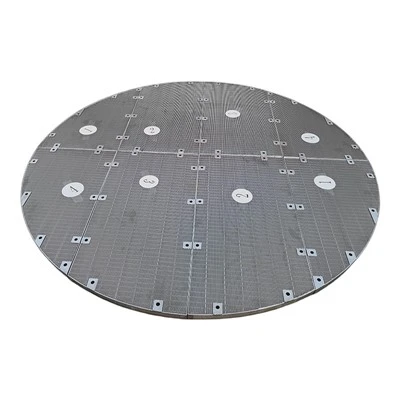
Now, let’s talk about the different types of wedge wire filter elements, because not all are created equal. Some are cylindrical, which are commonly used in cartridge filters or well screens. Others are flat-panel, used in pressure vessels or dewatering systems. There are also profile-wire elements, which have a more complex shape for specialized applications like gas filtration. As a supplier, we work with clients to customize the size, slot width, material, and shape of the element to fit their exact needs. For example, a client in the oil and gas industry might need a filter that can withstand high pressure and resist hydrogen sulfide corrosion, so we’d use a duplex stainless steel alloy. A food processing client might need a smaller slot size to filter fine particles, so we’d adjust the gap between the wedge wires to 100 microns or less.
One question I get a lot is: “How do wedge wire filter elements compare to other filter types?” Let’s break that down. Compared to woven mesh: wedge wire has higher open area, better pressure resistance, easier cleaning, and longer lifespan. Compared to sand filters: wedge wire filters require less backwashing water, take up less space, and don’t need to replace sand regularly. Compared to cartridge filters: wedge wire elements are reusable (in most cases) and have a much lower cost per filtration cycle. That’s why many industries are switching to wedge wire technology—they’re not just a better filter, they’re a better investment.
Of course, no filter is perfect, and wedge wire elements have their limitations. They’re not ideal for filtering extremely fine particles (under 50 microns, usually) because the manufacturing precision becomes more difficult at that scale. For those applications, you might pair a wedge wire pre-filter with a finer membrane filter. Also, while they’re durable, they can be damaged by extreme impact or improper handling, so it’s important to install them correctly and follow maintenance guidelines. That’s another area where our team helps clients: we provide installation tips, maintenance schedules, and even on-site support to ensure their wedge wire filter elements perform as long as possible.
Let’s take a real-world example to illustrate the value of wedge wire filter elements. A chemical processing plant I worked with a few years ago was using woven mesh filters to separate solid catalysts from liquid solution. The filters would clog every 3-4 days, require manual cleaning that took 8 hours each time, and they’d tear or warp after about 6 months. After switching to our wedge wire filter elements, the cleaning interval increased to 4 weeks, the cleaning time dropped to 1 hour, and the elements lasted over 3 years. The plant calculated that they saved over $120,000 a year in labor, downtime, and replacement costs. That’s the kind of return on investment that makes wedge wire elements so popular.
So, how do you know if a wedge wire screen filter element is right for your application? The key factors are the particle size you need to remove, the pressure and temperature of your process, the type of fluid or gas you’re filtering, and your budget. If you’re dealing with high flow rates, abrasive or corrosive materials, or frequent filter changes, a wedge wire element is almost always a better choice. Our team can help you assess your needs, whether you’re a small business looking for a single replacement filter or a large corporation needing custom elements for a full filtration system.
At the end of the day, a wedge wire screen filter element is more than just a metal screen—it’s a precision-engineered component that solves some of the most common headaches in industrial and commercial filtration. It’s durable, efficient, customizable, and cost-effective, making it a go-to for everything from water treatment to food processing to oil and gas. If you’re tired of filters that don’t live up to their promises, or if you’re just learning about wedge wire technology and how it can benefit your operations, I’m here to help. Our team has the expertise to guide you through the selection process, whether you need a standard size or a fully custom solution.
Don’t let inefficient filtration slow down your operations or eat into your profits. Reach out to us today to discuss your wedge wire screen filter element needs, and let’s find the right solution for you.
Wedge Wire Screen References
- Korosi, G., & Szabó, L. (2018). Filtration performance of wedge wire screens in liquid-solid separation. Journal of Industrial Filtration and Separation, 45(2), 112-120.
- American Society of Mechanical Engineers (ASME). (2020). Design and Manufacture of Wedge Wire Screen Elements. ASME B40.7 Standards for Industrial Filtration Equipment.
- Food and Drug Administration (FDA). (2021). Hygiene Standards for Food-Grade Filtration Components. FDA Guidelines for Processing Equipment in Food Facilities.
- Mining and Metallurgical Society of America (MMSA). (2019). Slurry Filtration Technologies for Mining Operations. MMSA Annual Conference Proceedings.
- European Industrial Water Association (EIWA). (2022). High-Efficiency Filtration for Municipal Water Treatment. EIWA Guidelines on Filtration System Design.
Anping County Yan Zhao Mining Sieve Mesh Co., Ltd.
As one of the most professional wedge wire screen manufacturers and suppliers in China, we have world-leading production equipment and strong manufacturing capabilities. Please feel free to buy advanced wedge wire screen made in China here from our factory.
Address: South of Datong New Village, Southern-Suburb Anping Industrial Park, Anping County, Hebei, P.R.China
E-mail: 17303289182@163.com
WebSite: https://www.yanzhaowedgewire.com/
