If you’ve ever worked with rectifier transformers (you know, the unsung heroes of industrial power systems), you’ve probably noticed something weird about their secondary windings—they’re not just a simple 3-phase output like a regular distribution transformer. Most folks new to rectifier tech ask: why shift those phases at all? As a guy who’s been selling and troubleshooting rectifier transformers for over a decade now, I’m here to break this down straight, no boring jargon dumps, and why it actually matters for your operation. Rectifier Transformer

Let’s start with the basics. A rectifier’s whole job is to turn alternating current (AC) into direct current (DC). Think of DC as that steady power your phone charger spits out, vs. AC that zips back and forth 50 or 60 times a second. Early rectifiers used simple 6-pulse setups: a transformer with 3 secondary windings, each feeding a diode or thyristor, turning 3 AC phases into DC. But here’s the catch with 6-pulse: the AC side gets this nasty thing called “harmonic distortion” —those weird, spiky extra frequencies that mess up other equipment (like motors, PLCs, even the power company’s meters) and the DC side has “ripple”—that wobbly DC that’s not smooth enough for sensitive gear.
That’s where secondary phase shift comes in. Wait, what even is it? For rectifier transformers, phase shift means offsetting the voltage phases on the secondary side relative to the primary (usually the utility grid side). Most common for high-power setups (think 12-pulse, 24-pulse, even 36-pulse) is shifting one secondary winding set by 30 degrees. Let’s use a 12-pulse example, since it’s way more widespread than 24 or 36. You’ve got two separate 6-pulse rectifiers inside one system, right? One ties to a “Y” secondary winding, the other to a “delta” secondary winding. That delta winding’s voltage is shifted 30 degrees from the Y winding. Boom—now instead of 6 pulses of DC per AC cycle, you get 12.
Why does that matter? Let’s get real about the pain points we see every day with clients. A few years back, we had a metal fabrication shop call us complaining their old 6-pulse rectifier was frying their drive motors every 6 months. Turned out the harmonics from the unshifted secondary were adding up to way more than the grid allowed—their power factor was sitting at 0.7, which meant they were paying a penalty to the utility on top of replacing motors left and right. We swapped their old transformer for a 12-pulse unit with a 30-degree phase-shifted secondary, and within 3 months their power factor jumped to 0.95, no more motor failures. That’s not just a “tech thing”—that’s real money saved.
Another big one: ripple reduction. For 6-pulse DC, the ripple is about 14% of the DC voltage. 12-pulse? That drops to like 1.5%. Way smoother power for things like electroplating lines, battery charging systems, or industrial motors that hate wobbly DC. If your process needs consistent DC (like coating metal parts where uneven current ruins the finish), phase shift is non-negotiable. Skipping it means reworking parts, wasting materials, downtime—costs add up fast.
Now, let’s talk about why this isn’t just a random trick. The math checks out, but here’s the practical side we tell our clients. When you shift the second set of phases, the harmonics from each 6-pulse set cancel each other out. The 5th and 7th harmonics (the worst ones for 6-pulse) from the Y winding are exactly opposite the ones from the delta shifted winding. They don’t disappear entirely, but they drop so much you barely need big, expensive harmonic filters anymore. That’s a huge win for facilities that don’t want to drop $10k+ on external filter gear.
Wait, but can you have too much phase shift? Yeah, that’s a mistake we see sometimes. A client last year tried to build their own 12-pulse setup with a random transformer, shifting 45 degrees instead of 30. It messed up the diode firing sequence, causing the rectifier to overheat and trip every hour. We fixed it by adjusting the secondary winding connections to get the exact 30-degree shift. Phase shift only works if it’s calibrated for your specific rectifier type—no one-size-fits-all here.
Let’s also clear up a common myth: phase shift isn’t just for big, fancy rectifiers. Sure, it’s standard for high-power (100kVA and up) setups, but even medium-sized systems (like 50kVA for a small battery bank) can benefit from a phase-shifted secondary. We’ve done retrofits for small manufacturing plants where they thought they couldn’t afford it, but ended up saving more than the transformer cost in 6 months on utility penalties and repairs.
Now, as a rectifier transformer supplier, we don’t just sell units—we tailor the phase shift to your exact load. If you’re running an aluminum smelter (super high power, needs ultra-smooth DC), we might do a 24-pulse setup with two separate phase-shifted secondaries, each shifted 30 degrees for a total 60-degree offset. If it’s a small electroplating line, we keep it simple with a 12-pulse 30-degree shift. The key is matching the phase shift number and type to your application, not just copying someone else’s setup.
Here’s the thing we always emphasize: the purpose of secondary phase shift isn’t a “nice-to-have”—it’s a way to make your rectifier system more efficient, cheaper to operate, and less likely to cause headaches. Without it, you’re dealing with higher energy waste, equipment damage, and utility issues. With it, you get cleaner power, lower costs, less downtime.
I’ve been in this game long enough to see clients go from frustrated with rectifier failures to singing praises after we adjust their secondary phase shift. It’s not rocket science, but it’s easy to overlook if you’re not deep in the weeds of power conversion. For anyone building or maintaining a rectifier-based system, don’t sleep on that secondary winding phase shift—it’s one of the most impactful tweaks you can make.
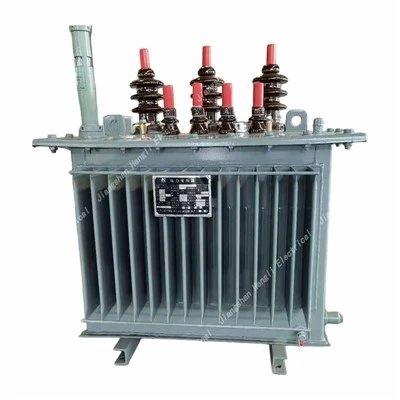
If you’re curious about how a phase-shifted rectifier transformer could work for your operation, whether you’re building a new system or retrofitting an old one, feel free to reach out to our team to talk through your needs. We’ll walk you through the right phase shift configuration, no jargon, just straight talk about what will save you money and keep your equipment running smoothly.
Single Phase Pole Mounted Transformer References
- Electrical Transmission and Distribution Reference Book, Westinghouse Electric Corporation
- Rectifier Transformers: Design, Application, and Troubleshooting, Cooper Power Systems
- IEEE Standard for Rectifier Transformer Performance, IEEE Std C57.18.10-2019
Zhejiang Jiangshan Hengli Electrical Co., Ltd.
Zhejiang Jiangshan Hengli Electrical Co., Ltd. is one of the most professional rectifier transformer manufacturers and suppliers in China, featured by quality products and low price. Please rest assured to wholesale cheap rectifier transformer in stock here and get pricelist from our factory. Customized orders are welcome.
Address: 212 Fuzhu Street Sidu Town, Jiangshan, Zhejiang, China
E-mail: henglijs@foxmail.com
WebSite: https://www.henlypower.com/
