Hey there, it’s Jake from the air prep team here—been getting this exact question nonstop lately from plant managers, maintenance techs, and even a few startup engineers fresh out of trade school: “Can I install multiple air preparation units in series?” Air Preparation Units

First off, I get why you’d ask. If you’ve got a system that’s dealing with really tough air conditions—like a dusty outdoor compressor feeding a paint shop, or a process that needs ultra-dry, oil-free air for medical equipment manufacturing—you might think stacking units would amp up the cleanliness. But before you start ordering two FRLs (Filter-Regulator-Lubricators) or even three main line filters to bolt together, let’s break this down like I would over a coffee with a tech at a trade show floor. No jargon dumps, just real-world stuff we’ve seen on job sites for the last 12 years.
Let’s start with the basics: what an air preparation unit actually does. Most standard units handle three core tasks—filtering out solid particulates (dirt, rust, pipe scale), removing moisture (water vapor or liquid condensate), and regulating pressure to a consistent level, plus sometimes adding lubrication for moving air tools. A single good unit works for most general applications: if you’re running a few pneumatic hand tools in a workshop with 100 PSI air, one properly sized FRL will keep things running smooth for years.
But here’s where the confusion kicks in. Let’s say you’ve got a compressed air system that’s pulling air from a compressor sitting outside in a sawmill yard. That air’s loaded with wood dust, humidity, and even tiny metal shavings from the compressor’s moving parts. A single 5-micron filter might catch the big stuff, but half the fine dust gets through, and the moisture’s condensing too fast for the unit’s auto-drain. So you start asking, “What if I add a second unit right after the first?”
Wait, hold on—first we need to talk about how series installations actually work in compressed air. When you put two components in series, the air flows through one, then the next, then the next, right? So each unit is processing the full volume of air from the compressor. That’s different from parallel, where air splits between two units to handle higher volume. Series is sequential flow, full load each time.
Now, the question isn’t just “can you” install them—it’s “should you?” Because there are right ways and a lot of wrong ways here. Let’s get into the scenarios where series makes sense, because they’re not as common as you might think.
First scenario: Ultra-high-purity applications. We recently worked with a pharmaceutical client that needed air for capsule filling equipment—FDA requires 0.01-micron filtration to keep particulate contamination below parts per million. A single 0.01-micron filter can do that, but only if the upstream air is already pre-filtered to remove 99.9% of large particulates. If you skip that pre-filter, the 0.01-micron element will clog in weeks, not years, and you’re wasting money replacing those expensive high-purity elements. In this case, installing two filters in series: a 5-micron pre-filter first, then the 0.01-micron final filter. That’s a smart series setup, not just stacking random units.
Another example: Severe moisture load. We had a food processing plant that was fighting condensate buildup in their air lines during summer months. Their original unit had a 40 CFM air dryer that couldn’t keep up with the 120-degree Florida humidity, so they added a second desiccant dryer in series. Wait—important note: it’s not just any dryer. It was a heatless desiccant dryer sized to handle the residual moisture from the first refrigerated dryer. Now, together they pull pressure dew point down to -40°F, which is required for their freezing tunnel equipment that can’t tolerate even tiny amounts of water in the air lines. That works because each unit has a specific job, and the series setup targets a problem one unit alone can’t solve.
But here’s where most people go wrong: stacking identical or overlapping units. Let’s say you’ve got a standard 5-micron filter, then you add another 5-micron filter right after it. What’s that doing? The first one catches 95% of particulates down to 5 microns. The second one will catch 90% of the remaining 5-micron particles, so total filtration gets down to 0.5 microns? Wait no—actually, no, that’s not how it works. A filter’s efficiency drops when it’s already loaded with particulates, so the second identical filter only gives you a tiny improvement, like 0.1% better overall efficiency. And you’re doubling your pressure drop every time you add a unit. Pressure drop is the loss of air pressure as it flows through pipes and components. Each air prep unit has a built-in pressure drop—usually 2 to 5 PSI for a well-sized, properly maintained unit. Add two, that’s 4 to 10 PSI drop. For a system running at 100 PSI, that’s a 10% pressure loss, which means your compressor has to work harder to make up for it, costing you extra electricity. We’ve had a client who stacked three identical 5-micron filters and saw a 12 PSI pressure drop—their energy bill went up 18% that month, and their tools started stalling because they weren’t getting enough consistent pressure. That’s a bad series install.
Another mistake: Adding a regulator in series. Wait, a regulator is meant to set pressure at a specific point. If you have two regulators in series, the downstream one will only work if the upstream pressure is high enough. So if your first regulator is set to 90 PSI, and the second is set to 80 PSI, the second one will just spill air constantly to drop it to 80, wasting compressed air. That’s a huge no-no—never install two regulators in series. We’ve gotten calls from techs who did this and wondered why their air usage spiked 20% and their compressor ran 24/7. Avoid that at all costs.
So what’s the rule of thumb for series installations, if you even need them? First, assess your system’s actual needs with a load calculation. Don’t guess. Most facilities don’t need more than one air prep unit, but if yours does, here’s how to do it right.
Step 1: Map your end use. Write down every piece of equipment on your air lines and their requirements. For example, capsule filler needs 0.01-micron air with -40°F dew point, paint spray gun needs 5-micron air with 70 PSI, so on. If one unit can’t meet the strictest requirement, then series is an option.
Step 2: Match unit roles, don’t duplicate. If you need fine filtration, first put a coarse pre-filter (1-5 microns) in series with a high-efficiency fine filter (0.01-0.1 microns). If you need ultra-dry air, put a refrigerated dryer (handles bulk moisture) first, then a desiccant dryer (handles residual moisture) second. Never put identical components in series.
Step 3: Size each unit for its specific job, not just total flow. The pre-filter only needs to handle the full system flow, but it doesn’t need the same efficiency or pressure rating as the final filter. The second dryer only needs to handle the residual flow from the first dryer, not the full compressor output—wait, no, actually, it does, but sized for dry air, not wet air. Working with a supplier that can help you size each component is key here—we do free load calculations for every client, no strings attached.
Step 4: Manage pressure drop. Every unit adds drop, so plan for that. If your system can only handle 5 PSI total drop, don’t add two units that each have 5 PSI drop. Use high-efficiency elements, properly sized piping, and auto-drains to keep drop low. We once helped a auto body shop that was stacking two filters, each with 6 PSI drop, and swapped them for a single high-efficiency 0.01-micron filter with 3 PSI drop—pressure went back up, energy bills dropped, and their paint finish improved because there was less pressure variation.
Also, let’s talk about maintenance, because series units mean more components to service. If you’ve got two filters, you have to change both elements instead of one. If you’ve got two dryers, you have to regenerate or replace desiccant for both. And the upstream unit in series will clog faster because it’s taking the brunt of the contamination, so it needs more frequent checks. We’ve seen clients skip maintenance on the upstream unit, so it got full of dirt, then the downstream unit had to work twice as hard, leading to early failure. If you’re going the series route, set a clear maintenance schedule and stick to it—we can help you build that.
Wait, let’s address a common myth here. Some techs think “more filters = cleaner air.” That’s only true if they’re different filters doing different jobs. If you’re filtering air, the first filter does most of the work. Adding a second filter that does the same job gives you negligible improvement, and the pressure drop will kill your system performance. I’ve tested this myself in our shop: we ran air through one 5-micron filter, measured particulate count at 10,000 parts per million (PPM). Ran through two identical 5-micron filters, got to 9,000 PPM—hardly a difference, and the pressure dropped 4 PSI. That’s money lost for almost no gain.
Another time we tested: a 5-micron pre-filter, then a 0.01-micron final filter. First filter caught 95% of particulates, second caught 99.9% of the remaining, so total was 0.005 PPM—way better, and the pressure drop was only 3 PSI total, which was acceptable for their system. That’s the kind of series setup that works.
So, to answer the original question: Yes, you can install multiple air preparation units in series—but only if it’s a targeted, non-duplicative setup that solves a specific problem a single unit can’t handle. Most of the time, our advice to clients is to fix the root issue first, not stack units. If you’ve got a dusty compressor, maybe move it inside, add a intake filter, or install a better single filter with a larger element that clogs less often. If you’ve got too much moisture, maybe upgrade your dryer instead of adding a second one. Only when those fixes don’t work, or you need ultra-specific air quality for a regulated process, do we recommend series.
Now, let’s talk about when series is a bad idea. If you’re just looking for “better” air and not a specific requirement, don’t stack. If you need consistent pressure for tools or equipment, adding components in series will hurt pressure consistency. If you don’t have the budget or staff for extra maintenance, don’t do it. We’ve had a few clients call us after installing three units in series, wondering why their system is worse, not better. We swap out the extra units for high-quality single units, and their problems go away.
At the end of the day, our job as a supplier isn’t just to sell you parts—it’s to help you get the right air for your system, without wasting your money or hurting your performance. If you’re questioning whether multiple air prep units in series are right for your facility, we can walk through your system, check your end use requirements, run a load calculation, and give you a honest recommendation—no upsell, no pushy sales talk.
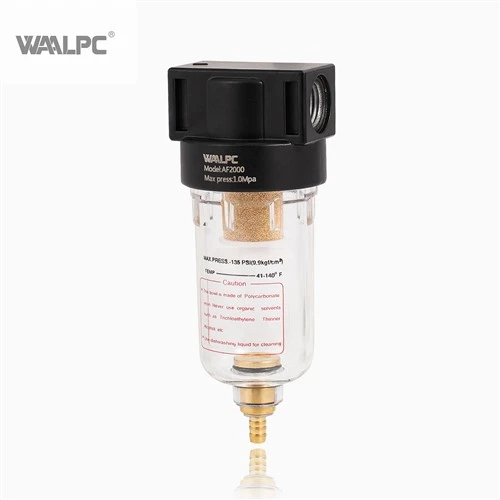
If you’ve been dealing with inconsistent air quality, high energy bills, or equipment that’s acting up, reach out. We’ve helped hundreds of clients sort out their air prep needs, whether that’s a single well-sized unit or a targeted series setup that fits their exact process. Don’t just guess—let us help you get it right.
Air Lubricators References:
- Compressed Air and Gas Handbook, 7th Edition, Compressed Air and Gas Institute
- Pneumatic System Design and Maintenance, Fluid Power Society, 2021
- Air Preparation Unit Selection Guide, International Organization for Standardization (ISO) 5598, 2018
Hangzhou Evershine Pneumatic Import & Export Co., Ltd.
Hangzhou Evershine Pneumatic Import & Export Co., Ltd. is one of the most professional air preparation units manufacturers and suppliers in China, featured by high quality pneumatic components. Please rest assured to wholesale bulk durable air preparation units from our factory. Welcome to contact us for custom service and OEM service.
Address: Hengkun Smart Industrial Park, No.176, Golf Road, Yinhu Street, Fuyang District, Hangzhou City, Zhejiang Province, China 311400
E-mail: Felix@waalpc.com
WebSite: https://www.evspneu.com/
