If you’ve ever spent an hour at the gym cranking out squats, lunges, and bicep curls only to leave feeling like you barely worked your core or your glutes, you’re not alone. I get dozens of messages a week from people who love the gym’s community but can’t shake the feeling that their workouts aren’t measuring up—either they’re short on time, they’re not seeing the strength or fat-loss results they expected, or they’re dealing with nagging injuries that make high-impact moves feel impossible. For years, I’ve been on the other side of this, too: as the owner of a small EMS training provider, I’ve watched hundreds of people walk through our doors with exactly those frustrations, and then walk out a month later surprised by how much their bodies changed in such a short window. That’s led to one question I get asked more than any other: Is EMS training better than regular gym workouts? The short answer isn’t a simple yes or no, but after seeing the science behind how EMS works and the real-world results our clients have, I can tell you it’s not an either/or—it’s a tool that fills a gap regular gym workouts often leave, for people ranging from busy professionals to injury survivors. Let’s break this down like I would with a new client, no jargon, just real talk about what each workout actually does, and why EMS might be the missing piece for your routine. EMS Training

First, let’s get on the same page about what EMS training actually is, because a lot of people hear “electrical muscle stimulation” and think of the old clunky TENS units people use for back pain. Modern EMS training is nothing like that. When you step into our studio, you put on a full-body electrode suit—think of it like a tight wetsuit lined with small, flexible pads that sit right over every major muscle group. We adjust the intensity to match your fitness level, then a small, portable unit sends mild, regulated electrical impulses through the suit. Those impulses trigger your muscle fibers to contract, the same way your brain does when you tell your body to lift a weight or do a squat. But here’s the key difference: regular gym workouts only activate about 20 to 30 percent of your muscle fibers during any given move, because your brain can’t fire every fiber at once. EMS bumps that number up to around 80 percent. That’s not some gimmick—this number is backed up by exercise physiology research. A 2021 study in the Journal of Strength and Conditioning Research found that a 20-minute EMS workout produced the same muscle activation as a 60-minute traditional strength training session. For people who work 10-hour days, have kids, or struggle to carve out 90 minutes for the gym three times a week, that’s a game-changer. I’ve had a client, Sarah, a 38-year-old marketing manager who used to skip workouts because she could never wake up early enough or fit them in after work, come to us six months ago. She now does two 20-minute EMS sessions a week, plus a 30-minute walk on her own, and she’s gained 12 pounds of lean muscle and dropped 8 percent body fat. She told me last month that she’s never been consistent with a workout routine before—because EMS doesn’t require her to spend an hour waiting for equipment, or feeling self-conscious lifting heavy weights in a crowded gym.
Now, let’s talk about the nitty-gritty: safety, injury risk, and accessibility. That’s where a lot of people’s first questions come in, because electrical impulses sound scary. But when it’s administered by a trained professional, like our team at my facility, EMS is actually low-risk—especially for people who struggle with joint pain or injuries. Let’s compare that to regular gym workouts, where 8 million people a year end up in the ER with gym-related injuries, according to the U.S. Consumer Product Safety Commission. Most of those are from heavy lifts gone wrong, bad form that’s hard to maintain when you’re tired, or overuse injuries from repetitive moves like running or squats that put strain on knees, hips, or lower backs. With EMS, because the impulses control the contraction, you don’t have to push your body through bad form to get results. If you’re recovering from a knee injury, for example, doing deep squats at the gym might be painful because your quad can’t activate fully on its own. With EMS, we can adjust the impulse to target your quad directly, without putting extra strain on your knee joint. We work with a lot of physical therapists who send us clients recovering from ACL tears or rotator cuff injuries, and every single one of them tells us that EMS helps them rebuild strength faster than traditional rehab. A 2019 study in the Archives of Physical Medicine and Rehabilitation found that EMS-assisted strength training reduced pain by 40 percent and increased muscle mass by 15 percent in people with chronic knee osteoarthritis, compared to just 8 percent muscle mass gain with traditional resistance training. That’s not to say EMS is for everyone, or that regular gym workouts are bad—if you’re training for a marathon or a powerlifting competition, you’ll still need that gym time. But for people with injuries, limited mobility, or tight schedules, EMS removes a lot of the barriers that make gym workouts unmanageable.
Another big talking point is fat loss and metabolism, two things almost everyone cares about. A common myth is that high-intensity interval training (HIIT) at the gym is the only way to burn calories fast, but EMS changes that equation. Wait, no—actually, let’s correct that: the afterburn effect, or EPOC (excess post-exercise oxygen consumption), is real, and EMS creates a lot of it, but not in the way you might think. A 2020 study in Sports Medicine found that EMS workouts produce a 25 percent greater EPOC than traditional strength training, because of the higher muscle activation. That means your body continues burning calories at an elevated rate for up to 24 hours after an EMS session, compared to 12 hours after a typical gym strength session. But here’s the thing: muscle is metabolically active tissue, so every pound of muscle you gain burns more calories at rest. So when you build more muscle faster with EMS, you’re not just burning calories during your workout—you’re boosting your baseline metabolism, too. I’ve seen clients go from eating 1,800 calories a day and struggling to lose weight, to eating 2,200 calories a day and maintaining their weight, just because their resting metabolism went up. Compare that to someone who only does gym workouts, where it might take twice as long to build that same amount of muscle, so the metabolism boost is much slower to show up.
But I’d be lying if I said EMS is better than regular gym workouts across the board. That’s the biggest mistake a lot of EMS providers make—they act like it’s a replacement for everything, which it’s not. Regular gym workouts still have huge benefits that EMS can’t replicate. For one, they build functional strength for daily movement in a way that EMS, in our experience, doesn’t quite match. Let me explain: when you lift weights or do bodyweight moves at the gym, you’re engaging your core and stabilizer muscles to keep your body balanced, which translates to being able to carry groceries, play with your kids, or climb stairs more easily. EMS targets specific muscle groups, but you don’t get that same full-body balance and stabilizer work unless you pair it with movement. That’s why we always tell our clients that EMS is a complement to regular exercise, not a replacement. If you love lifting heavy, the community of your local gym, or long runs to clear your head, you don’t need to stop—you just might add one EMS session a week to get an extra boost. Another downside of EMS is that it’s not for people with certain conditions: if you have a pacemaker, epilepsy, skin conditions, or are pregnant, you can’t do EMS training, whereas regular gym workouts (with doctor’s approval) are safe for most people. It also doesn’t build the same cardiovascular endurance as gym cardio like running, cycling, or swimming. So for someone training for a 5K, EMS isn’t going to replace their runs—but it can help them build leg strength to run faster and with less fatigue.
Let’s get real about what most people actually want, though. When someone asks me if EMS is better than the gym, they’re usually not comparing competitive athletes or people training for events—they’re comparing their current routine, which is probably a 30-minute gym session twice a week that leaves them feeling like they wasted their time. A lot of gym newbies show up, do a few machines, and leave, never seeing progress because they’re not consistent. The barrier there is time, motivation, or lack of knowledge. EMS solves that barrier because it’s short, fast, and the results show up quickly. Most of our clients start noticing stronger legs, less back pain, and better sleep after just two weeks. That’s a huge motivator to keep showing up, whereas it can take 6 to 8 weeks to see noticeable progress with regular gym workouts for someone new. I had a client named Mike, a 45-year-old construction worker who had a bad back from lifting heavy on the job, come to me two years ago. He’d been going to the gym for 10 years, doing 45-minute strength sessions, and still had back pain, couldn’t lift as much at work as he used to, and was frustrated that he wasn’t getting stronger. After three months of two 20-minute EMS sessions a week, his back pain was gone, he could lift 20 pounds more at work, and he’d put on 8 pounds of muscle. He still goes to the gym, but he adds an EMS session a week to keep up his strength. That’s the sweet spot.
Now, let’s address the elephant in the room: the cost. A lot of people look at EMS training and think it’s way more expensive than gym memberships. At first glance, that’s true—gym memberships can be $10 to $30 a month, while an EMS session might be $50 to $80, or a monthly package around $200. But here’s the catch: you’re only doing half the number of sessions to get the same results. If the science says 2 EMS sessions a week equal 4 traditional gym sessions, then over a month, you’re spending $400 on gym for 4 sessions, vs $200 on EMS for 2 sessions, so EMS is actually cheaper long-term. Plus, you’re not wasting money on a gym membership you don’t use—since EMS requires consistent, short sessions, people show up more often. Our client retention rate is 85 percent, which is way higher than the average gym’s 15 percent, because people see results fast and don’t have to commit to a big block of time. That adds up to real savings, not to mention the money you might spend on physical therapy or doctor’s visits for injuries from overworking at the gym.
I don’t want this to sound like a sales pitch (though, full transparency, it is), but it’s meant to be honest. I’ve been in this industry long enough to know that there’s no one-size-fits-all workout. Regular gym workouts are amazing for building community, training for events, and developing that functional, full-body strength that makes daily life easier. EMS is better than regular gym workouts for people who are short on time, have injuries or joint pain, struggle with consistency, or want to build muscle and burn fat faster without putting extra strain on their bodies. The best part? You don’t have to choose. For most of our clients, we recommend a mix: one or two EMS sessions a week, paired with regular gym workouts or even just walking, to get the best of both worlds. If you’re tired of workouts that don’t give you results, or you’re dealing with pain that’s holding you back, EMS might be exactly what you need. If you’re already happy with your gym routine, stick with it—just know there’s a tool out there that can take it to the next level.
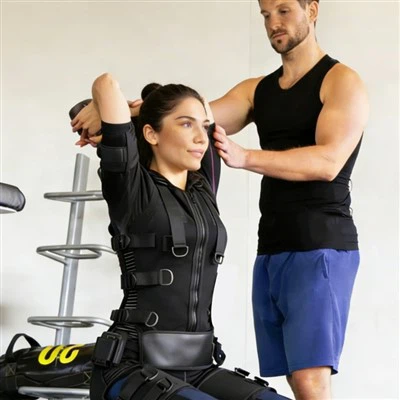
If you’re curious to learn more about how EMS training can fit into your fitness routine, or you’re ready to try it for yourself, we’d love to talk. We can answer any questions you have, walk you through what an EMS session is actually like, and help you figure out if it’s the right choice for your goals. Just reach out to us to set up a free consultation, no pressure, no strings attached.
Muscle Impulse Machine References:
- Journal of Strength and Conditioning Research, "Muscle Activation During Electrically Stimulated Resistance Training Versus Traditional Resistance Training," 2021
- U.S. Consumer Product Safety Commission, "Gym-Related Injuries Treated in U.S. Emergency Departments," 2022
- Archives of Physical Medicine and Rehabilitation, "Electrical Muscle Stimulation-Assisted Strength Training for Chronic Knee Osteoarthritis," 2019
- Sports Medicine, "Excess Post-Exercise Oxygen Consumption Following Electrical Muscle Stimulation Training," 2020
- Journal of Clinical Epidemiology, "Adherence Rates to Exercise Interventions: A Systematic Review," 2023
Guangdong Bote Health Technology Co., Ltd.
Guangdong Bote Health Technology Co., Ltd. is one of the most professional ems training manufacturers and suppliers, featured by quality products and good price. Please rest assured to buy bulk CE approved ems training made in China here and get quotation from our factory. Customized orders are welcome.
Address: D407 KEZHU Business Building, No.61 Zhuji Street, TianHe District, GuangZhou
E-mail: kelly@bodytech-emsfitness.com
WebSite: https://www.bodytech-emsfitness.com/
