Hey folks, if you’ve ever worked in the textile industry, manufacturing, or even just bought a piece of polyester clothing, you’ve probably heard two terms thrown around a lot: polyester chip and polyester staple fiber. When I first started out as a polyester chip supplier, I totally mixed these two up— I mean, they’re both made from the same basic stuff, right? It wasn’t until I got way more involved in the supply chain that I realized they’re actually totally different products, each with their own specific uses, production processes, and even quality specs. Today, I’m breaking down exactly what sets them apart, why it matters for anyone in the game, and why a lot of suppliers (even some old heads I know) don’t get this right either. First off, let’s start with the basics of what each is, because you can’t compare two things if you don’t know their core. Polyester Chip
Polyester chip (sometimes folks just call it “PET chip” or “polyester resin chip”) is basically the raw, unprocessed plastic pellet that’s the foundation of all polyester products. We make it by polymerizing purified terephthalic acid (PTA) and monoethylene glycol (MEG)—those are the two key raw materials, if you’re curious. The polymerization process heats those two ingredients up in a big reactor, where they link together into long, chain-like polymer molecules. When it cools, we cut that solid mass into small, uniform chips—usually around 2 to 5 millimeters wide, like tiny colored or clear M&Ms. A lot of people think chips are just “plastic bits,” but no—these are standardized, high-purity pellets with super specific molecular weight, moisture content, and melt viscosity. For example, a bottle-grade polyester chip has a lower molecular weight, right? Because you melt it to make soft drink bottles. Then there’s fiber-grade polyester chip, which is way higher molecular weight—perfect for spinning into yarn later. That’s where I come in: I supply fiber-grade polyester chip most of the time, because that’s what a lot of textile mills, filament manufacturers, and even non-woven fabric plants need.
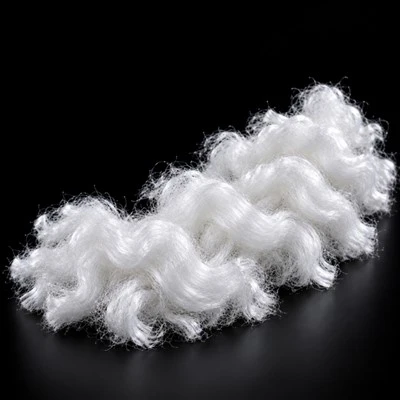
Now polyester staple fiber (PSF) is the end product, usually made directly from polyester chip, but it’s totally different. Staple fiber is short, cut fibers—think the stuff you see in cotton t-shirts, wool blends, or even mattress stuffing. It’s usually between 38 to 150 millimeters long, and it’s cut to specific lengths depending on what you’re making. The process for making PSF goes like this: first, you melt down the polyester chip, then extrude it through tiny holes in a spinneret (that’s a metal plate with hundreds of little holes, almost like a showerhead). The melted polymer comes out as continuous filaments, you stretch them to make them strong, then cool them, and finally cut them into those short staple lengths. So PSF is a finished fiber, ready to be spun into yarn, mixed with other fibers, or made into non-wovens.
Wait, so the biggest immediate difference is that one is a raw material and the other is a semi-finished product? That’s the core, right? But let’s dig deeper into stuff that actually affects how you use each. Let’s talk about production specs first. Polyester chip has way tighter quality controls, at least when you’re dealing with a legitimate supplier. For fiber-grade chip, moisture content has to be under 50 parts per million—if there’s even a little water, when you melt it to spin fiber, the water boils and creates bubbles, which ruin the yarn’s strength. Melt viscosity is non-negotiable too—if it’s too low, the filament breaks mid-spinning; too high, it clogs the spinneret. We test every batch of chip before we ship it out, because if a mill gets a bad batch, they can shut down their whole line for hours, losing thousands in downtime. Polyester staple fiber, on the other hand, has its own specs, but they’re more about fiber length, denier (that’s the thickness of the fiber), and crimp (the little waviness in the fiber, which makes it soft and easy to spin). Crimp is a big one for PSF—you don’t need that in polyester chip, obviously, because it’s not a fiber yet.
Then there’s end use, which is where most people feel the pain of mixing these two up. Let’s say someone comes to me looking for a polyester chip, but they actually need PSF. If I sold them chip by mistake, they’d be stuck—because they can’t spin yarn from straight chips, right? They’d have to go through the entire extrusion process, which they might not have the equipment for. Conversely, if I sold a mill PSF when they needed chip, that mill would have to remelt the PSF to process it, which is a waste of time and material—plus PSF has additives that might not be compatible with what they’re making. Let’s give real examples of end uses to make this clear. Polyester chip goes into two big buckets: bottle grade (like soda and water bottles, food containers, even cosmetic jars) and fiber grade (which goes to PSF manufacturers, filament producers). I also supply some specialty grade chip for things like polyester film, which is used in packaging and electrical insulation. Polyester staple fiber? It’s all about textiles and soft goods—cotton blend t-shirts, fleece jackets, carpet padding, mattress fill, face masks (the old-fashioned kind from a few years back), even upholstery fabric. There’s also high-tenacity PSF used in tire cords, but that’s a step above the regular staple for clothing.
Cost is another big difference, especially if you’re sourcing for a small operation. Polyester chip is way cheaper per kilogram, right? Because it’s a raw material—you’re paying for PTA and MEG, plus the polymerization process. Polyester staple fiber adds another layer of processing: extrusion, stretching, cutting, crimping, quality testing. So PSF is usually 20 to 40% more expensive than the same amount of fiber-grade chip. Wait, but hold on—don’t just jump to buying chip to save money. If you don’t have the extrusion equipment to turn chip into fiber, the cost of buying that equipment (or outsourcing the extrusion) will totally erase the savings. That’s why most small to medium textile mills would rather just buy PSF, even if it’s more expensive per kg, because they don’t have to invest in extra gear. I see this all the time: a new startup making custom hoodies will reach out to me asking for polyester chip, not realizing they can’t use it. I steer them straight to a PSF supplier, because it’s way easier for them.
Another thing that’s a game-changer: storage and handling. Polyester chip is solid pellets, so it’s easy to store—you can stack bags of it in a warehouse, it doesn’t attract moisture too much (as long as you keep it in a dry place), and it’s not prone to tangling. Polyester staple fiber? It’s like a big, fluffy mass, usually baled up tight for shipping. You have to be careful not to pack it too hard, because it can lose its crimp, which makes the fiber less soft. Also, PSF is more prone to catching dust or dirt, because of its texture. When I ship polyester chip, I use regular woven polypropylene bags; for PSF, the bags are usually lined with a thin plastic film to keep out moisture and dust. That might seem small, but if you’re handling thousands of kilograms, it adds up.
Wait, let’s talk about something that a lot of suppliers don’t mention: molecular structure. Polyester chip is a linear polymer, right? The molecules are long and straight, which is why when you melt it, it can flow easily and form consistent products. Polyester staple fiber, after you extrude and stretch it, has even longer, more aligned molecules—stretching makes the molecules line up, which makes the fiber way stronger than the original chip. That’s why PSF is durable enough for clothing and carpet, while straight chip would be too brittle if you tried to use it as a fiber.
I want to also clear up a common misconception: some people think polyester staple fiber is just “short-cut chip,” which is totally wrong. If you tried to cut polyester chip into short pieces, you’d get brittle, uneven bits that would never work as a fiber. The process for making PSF is specific to forming continuous filaments first, so the molecules are aligned properly. Cutting random bits of chip would not give you any of the crimp, strength, or consistency that PSF has. I’ve had customers ask for that before—total mistake.
Now, why does this matter to you, whether you’re a manufacturer, a brand owner, or even someone who just buys polyester products? Let’s say you’re a clothing brand looking to launch a line of sustainable fleece. If you source your materials wrong, you could end up with fleece that pills way too much, or falls apart after a few washes. If you go with PSF made from high-quality fiber-grade chip (which is what I supply, fyi), you’ll get a softer, more durable fleece. But if you’re making water bottles, you can’t use PSF—you need bottle-grade polyester chip, because that’s the only material that’s food-safe for single-use containers.
I also want to call out the confusion in the supply chain, because that’s where I make my money as a polyester chip supplier. A lot of brokers will mix up terms to make a sale—they’ll call PSF “polyester chip” to unload excess stock, or vice versa. That’s a total bait and switch, and it hurts everyone. A mill I work with last year got a shipment of what was supposed to be fiber-grade polyester chip, but it was actually leftover PSF that someone melted down and re-pelletized. They spent a week spinning yarn, and half of it broke mid-process, costing them $20k in downtime and wasted material. That’s why I always make sure to label every batch of polyester chip clearly, tell customers exactly what grade it is, and never mix terms.
Wait, let’s wrap this up with a quick recap, so you can reference it later. Polyester chip = raw, standardized PET pellets, made from PTA and MEG, used to make bottles, filaments, film, and (when processed) PSF. Polyester staple fiber = semi-finished, short-cut fibers, made by extruding and cutting polyester chip, used for textiles, soft goods, and low-strain products. Key differences: chip is a raw material, PSF is a processed fiber; chip is cheaper, more standardized, easier to store; PSF is more expensive, softer, and ready to use for spinning.
At the end of the day, whether you’re sourcing polyester chip or PSF, you need to know exactly what you’re buying and what it’s for. I’ve been in this industry for 12 years, and I still run into people who mix these two up—no shame, it’s easy to do. If you’re looking for reliable, high-quality fiber-grade polyester chip, or you’re not sure what you need, hit me up to talk through your project. I don’t do the bait and switch like some other suppliers, I’ll tell you straight if you need chip or should go to a PSF provider. No hidden fees, no fine print, just honest advice and consistent product.
Fiber References
- Textile Institute. (2020). Polyester Fiber Manufacturing and Applications. Manchester: Textile Institute Press.
- Modern Plastics Magazine. (2021). PET Resin Grades and Processing Specifications. New York: Scranton Gillette Communications.
- International Fiber Journal. (2022). Staple Fiber vs. Filament: Key Differences for Textile Producers. Boston: Rodale, Inc.
- Polyester Association of North America. (2023). Guidelines for Polyester Raw Material Sourcing. Washington D.C.: Polyester Industry Trade Group.
Suzhou Gongsheng Import & Export Co., Ltd.
Suzhou Gongsheng Import & Export Co., Ltd. is one of the most experienced polyester chip manufacturers and suppliers in China. With a professional production team, we are able to provide high quality customized products with low price. We warmly welcome you to wholesale the newest polyester chip made in China here from our factory. If you have any enquiry about pricelist and free sample, please feel free to email us.
Address: Room 1205, Aikang Building, Yangshe Town, Zhangjiagang, Suzhou, Jiangsu, China
E-mail: betsy@x-textile.com
WebSite: https://www.x-textile.com/
