As a level instruments supplier who’s spent the last decade working side-by-side with process plant managers, maintenance leads, and budget directors across chemical, food and beverage, and mining operations, I’ve lost count of how many times I’ve heard the same lament: “We bought the cheapest level sensor, but it’s cost us way more in the long run.” That frustration isn’t just anecdotal—it’s rooted in a gap many plant teams miss: the way a level instrument’s measurement method doesn’t just deliver data, it shapes every layer of cost effectiveness, from installation to downtime to regulatory compliance. Let’s break this down, straight from the shop floor and the supply side. Level Instruments
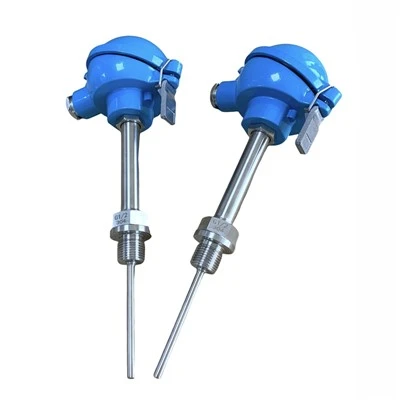
First, let’s define what “cost effectiveness” really means for level instruments—it’s not just the upfront purchase price, it’s the total cost of ownership (TCO) over three, five, even ten years. And the measurement method is the single biggest driver of that TCO. To illustrate, let’s walk through three common level measurement methods we sell every week, and how each stacks up when you dig past the sticker price.
Take ultrasonic level sensors, one of the most common non-contact options. When a plant manager tells me they’re choosing ultrasonic to save $200 upfront, I immediately ask where the tank is and what’s inside. Here’s the catch: ultrasonic sensors work by bouncing sound waves off the material surface, which means their accuracy drops sharply in environments with high vapor, dust, or turbulence—think a pulp and paper tank with thick, frothy black liquor, or a mining bin with fine coal dust. A $500 ultrasonic sensor might give readings that are off by 10% or more in those conditions. What does that cost? Let’s say a food and beverage plant uses level sensors to track ingredient stock. If the sensor overstates sugar levels by 10%, they might run a batch too thick, leading to product waste, rework, or even a full product recall—costing thousands, if not tens of thousands, in lost revenue. On the flip side, a guided wave radar (GWR) sensor, which uses electromagnetic pulses to measure level, is far more accurate in those same vapor or dust-heavy environments, with a typical accuracy of +/- 1mm, no matter the surface texture or surrounding conditions. The upfront price is $800, but over a year, that GWR eliminates 90% of the level-related measurement errors that lead to downtime and waste. For a plant running 20 level sensors, that $6,000 upfront difference turns into $20,000 or more in annual savings from reduced waste and unplanned stops.
Installation is another layer where measurement method hits cost effectiveness hard. Let’s think about differential pressure (DP) level transmitters, the go-to for many chemical and oil and gas plants. DP sensors work by measuring the pressure difference between the top and bottom of a tank to calculate level. But installing a DP system isn’t just mounting one device on the tank—it requires impulse lines, tubing, and seals to connect the sensor to the tank’s top and bottom ports. Those impulse lines are a nightmare for maintenance: in tanks holding viscous fluids like heavy oil or polymer, the lines can clog, freeze, or accumulate sediment, leading to inaccurate readings every few months. Fixing that means shutting down production, manually flushing the lines, and replacing worn parts—costing an average of $1,500 per service call, plus up to 8 hours of downtime for a mid-sized refinery. By contrast, a non-contact radar level sensor requires no penetrations into the tank wall (or just a small, hygienic top-mount port, ideal for food and pharmaceutical applications). There are no impulse lines to clog, no seals to replace, and installation takes 15 minutes, not 4 hours. For a plant with 15 DP transmitters, switching to radar eliminates $22,500 in annual maintenance costs alone, plus 60 hours of downtime that could be used for profitable production runs.
Regulatory compliance is a third, often overlooked, angle. Process plants are bound by strict OSHA, EPA, or FDA rules—any level measurement error can trigger fines, non-compliance notices, or even shutdowns. Let’s take a wastewater treatment plant that’s required by the EPA to track the level of sludge in holding tanks to ensure proper treatment. An ultrasonic sensor’s reading error of 8% could lead the plant to discharge too little or too much chemical into the sludge, resulting in a $10,000 EPA fine for improper effluent levels. A GWR sensor, with its tight accuracy, ensures the chemical feed is perfectly calibrated, keeping the plant compliant and avoiding those penalties. That’s not a one-time cost: repeat fines can add up to six figures a year for mid-sized facilities, while a more accurate measurement method removes that risk entirely.
Now, let’s address the elephant in the room: when a measurement method seems more expensive upfront, but offers long-term savings, why do so many teams still pick the cheaper option? A big part of it is short-term budgeting. Plant managers are often tasked with justifying costs on a quarterly basis, so a $500 ultrasonic sensor fits their budget, while an $800 GWR bumps their monthly expenditure above target. But that’s a mistake—here’s a real example from a client of mine: a small chemical plant in Texas bought 10 ultrasonic sensors for $5,000 total in 2021. By 2022, they’d spent $12,000 on maintenance, sensor replacements, and waste from incorrect level readings. In 2023, they switched to GWR sensors for $8,000 upfront, and their 2023 TCO was just $1,200 for maintenance, plus no product waste. That’s a 70% lower TCO in year two, even with a 60% higher initial purchase price.
Another factor is lack of knowledge about measurement method tradeoffs. Many plant teams don’t realize that what works for one application might be a disaster for another. An ultrasonic sensor is perfect for open, vapor-free tanks with uniform surfaces—like a water storage tank in a factory, where accuracy of +/- 100mm is more than enough. But for a closed, high-vapor tank in a pharmaceutical plant, that same ultrasonic sensor is a bad fit, because it will deliver inaccurate readings and require constant calibration. As a supplier, our job isn’t just to sell sensors—it’s to walk teams through that tradeoff: “Your application has fine dust, so GWR will cost $300 more upfront, but save you $5,000 a year in downtime.” We bring data from 100+ similar plants to back that up, so teams can make a decision based on long-term cost, not just the number on the price tag.
There’s also a middle ground for teams that want to balance upfront cost and long-term savings: hybrid level measurement systems. These combine two methods, like radar and ultrasonic, to get the best of both worlds. For example, a mining operation using a hybrid sensor for a coal bin gets the non-contact benefits of radar to avoid clogging, plus the lower upfront cost of ultrasonic for normal, low-dust periods. The result is a TCO that’s 20% lower than a full radar system, with accuracy that’s good enough for their operations. But even hybrid systems need to be matched to the application—we’ve seen teams pick a hybrid that’s not suited for their dust levels, leading to more problems than if they’d chosen a single, properly matched method.
Let’s talk about another often forgotten cost: calibration and downtime. Some measurement methods require quarterly calibration, others only every two years. A DP transmitter needs monthly checks in viscous fluid applications, because impulse lines shift over time. A radar sensor only needs calibration once a year, because it has no moving parts and is unaffected by surface conditions. For a plant with 20 level instruments, that’s 80 calibration hours a year for DP systems, versus 20 hours for radar—freeing up maintenance teams to work on other critical equipment, like pumps and valves, which have a bigger impact on production. That’s a hidden cost that’s rarely factored into TCO calculations, but makes a huge difference in overall plant efficiency.
So what’s the takeaway for plant teams when choosing a level measurement method? It’s not about picking the cheapest or the most expensive—it’s about aligning the method to your specific application, and accounting for all costs, not just the upfront purchase. As a supplier, we’ve seen too many teams make the wrong choice because they only look at the price tag, and end up paying for it in downtime, waste, and fines. The best way to avoid that is to talk through your needs with a partner who understands level instruments, can walk you through the tradeoffs, and has real-world data to back up their recommendations.
If you’re a plant manager, maintenance lead, or operations director who’s dealing with level instrument issues—whether it’s frequent downtime, inaccurate readings, or overspending on maintenance—we’re here to help. We work with plants of all sizes, from small food processors to large chemical refineries, to find the level measurement method that fits your budget and your long-term goals. Contact our team to discuss your needs, get a custom TCO analysis, and find the right level instruments for your operations.
Flow Instruments References
- Process Industry Practices. (2020). Level Measurement and Control Best Practices. Process Industry Practices Council.
- International Society of Automation (ISA). (2021). Total Cost of Ownership for Industrial Measurement Instruments. ISA Publications.
- US Environmental Protection Agency (EPA). (2022). Compliance Guidelines for Industrial Level Measurement in Wastewater Treatment. EPA Office of Water.
- Endress+Hauser. (2023). Level Measurement Technology Tradeoff Analysis: A Supplier’s Perspective. Endress+Hauser Digital Solutions.
- Food and Drug Administration (FDA). (2021). Hygienic Level Instrumentation for Food and Pharmaceutical Manufacturing. FDA Food Safety and Inspection Service.
Anhui Tiankang Group Co., Ltd.
As one of the most professional level instruments manufacturers and suppliers in China, we’re featured by quality products and good service. Please feel free to wholesale bulk customized level instruments made in China here from our factory. Welcome to contact us for pricelist.
Address: No. 20, South Renhe Road, Tianchang City, Anhui Province, People’s Republic of China
E-mail: tiankanggroup006@163.com
WebSite: https://www.tkanggroup.com/
