Hey folks, let’s cut to the chase if you’re running a glass fabrication shop, metal finishing line, or any operation that relies on consistent, high-quality tempered parts—you already know how much rides on your tempering furnace. Mess up the tempering process, and you’re staring at cracked glass, warped metal, or parts that fail stress tests before they even leave your facility. As a tempering furnace supplier who’s spent years working side-by-side with shop floor managers and process engineers, I can tell you: monitoring this process isn’t just a “nice-to-have”—it’s the make-or-break between scrap that eats into your profits and parts that keep your customers coming back. Tempering Furnace
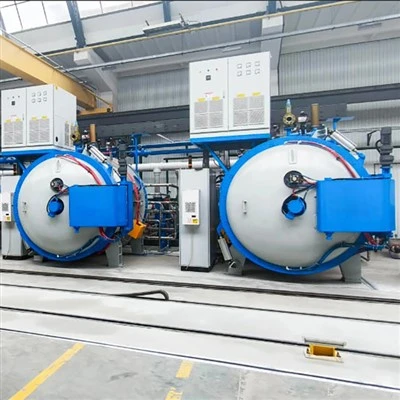
First off, let’s ground this in what tempering actually does, because if you don’t get the basics, your monitoring efforts will miss the mark. Tempering (for glass, at least, which is 90% of what we supply furnaces for) heats flat glass to around 620–650°C—right at its softening point, but not so hot it turns to slush—then blasts both sides with cold air to quench the surface fast. That rapid cooling compresses the outer layers of the glass while the core stays stretched, which makes tempered glass 4–5 times stronger than regular annealed glass. For metal tempering, it’s similar: heating steel to a specific temp, holding it, then cooling to get the right hardness and toughness. Either way, if your temps swing, your hold time’s off, or your quenching air isn’t consistent, you end up with weak spots, uneven temper, or total waste.
So how do you actually monitor this? Let’s break down the most practical, actionable steps I’ve seen work in the shops I’ve visited—no fancy jargon, just stuff you can implement even if you’re not a data science whiz.
First: Monitor the inside furnace temperature constantly, not just when you load parts. Wait, before you roll your eyes—old school methods where you check a thermocouple once an hour are dead. Why? Furnace hot spots are real. I’ve seen 10°C differences between the top and bottom of a small batch furnace, or a cold spot right next to the door that’s off by 20°C. For glass, that 10°C swing can make the edge of your panes under-tempered and the middle too soft. For steel, that same swing can lead to inconsistent hardness across your parts.
Here’s what we recommend for our furnaces (and it’s the same logic regardless of the brand—trust me, I’ve seen it work across the board): Use high-precision K-type thermocouples, place them in multiple spots, not just the control panel. Stick one near the top of the load, one in the middle, one by the door, and even one on a dummy part you load every batch. The dummy part is key—throw a small piece of your actual stock in with every load, glue a thermocouple to it, and track its temp through the entire cycle. That way, you’re not just measuring the air temp inside the furnace—you’re measuring the temp of the parts themselves, which is the only number that actually matters. Pro tip: Ditch the analog dial thermometers. Digital ones with real-time logging don’t cost that much anymore, and you can pull the data after every batch to spot trends. If temp drops 15°C mid-heat, you’ll catch it before you run a whole load of bad parts.
Next, track hold time like it’s your job—because it is. Hold time is how long you keep the parts at that target temp. Too short, and the core of the part never reaches the right temp; too long, and you’re wasting energy and possibly warping delicate parts. For glass, hold time is usually around 1 minute per 1mm of thickness—so a 6mm pane needs 6 minutes, a 10mm pane needs 10. But here’s the thing: that formula works only if your furnace is heating evenly. If your cold spot is 10°C lower, that 6mm pane might only hit the right temp for 4 minutes in that hot spot, meaning it’s under-tempered. How to monitor hold time? Tie it directly to your temp data. Set up your furnace’s control so it only starts counting hold time once all your thermocouples hit the target range, not just the one on the control panel. That’s a simple tweak, but it cuts scrap by a ton. I had a customer last year who was running 12% scrap because he was starting the hold timer as soon as the furnace hit temp, not the parts—within a week of adjusting that, his scrap dropped to 2%. Crazy how something that basic makes that big a difference.
Then, there’s quenching—this is the other half of the tempering process that most people sleep on. A lot of shops monitor heat, but they don’t check if their quenching system is working. Quench air pressure, volume, and even uniformity across the glass/metal surface make or break the final temper. For glass, if one side gets more cold air than the other, you’ll end up with a “bowed” pane that’s useless. For metal, uneven quenching causes internal stress that leads to cracking down the line.
So what do you monitor here? First, air pressure at the nozzles. Set up pressure gauges at multiple points along the quench channels—one at each corner, one in the middle—so you can make sure all nozzles are blowing at the right PSI (usually 1.5–2.5 PSI for glass, depending on thickness). If a nozzle gets clogged, its pressure will drop, and that spot will be under-quenched. We add built-in quench pressure sensors to our furnaces, but if you’ve got an older unit, you can grab cheap pressure gauges from any hardware store and tape them to the nozzles—way cheaper than replacing a batch of bad parts. Also, watch quench time: don’t just blast air for 30 seconds and call it done. Adjust quench time based on part thickness too—thicker glass needs longer quenching to get that full temper. We set our furnaces to sync quench time with hold time, so you don’t have to manually adjust it every time you switch part sizes. That small automation tweak eliminates human error.
Wait, let’s talk about data because that’s where modern monitoring really shines. A lot of people think “monitoring” means staring at a screen all day, but it’s more about logging data so you can spot patterns you’d miss otherwise. For example, if you notice that every time you run a load on a Tuesday morning, your scrap is 5% higher than on Wednesdays, that’s a sign your furnace’s heating element is wearing out—maybe it’s taking longer to reach temp on Mondays after the weekend shutdown. Or if you run a certain part size and always get uneven temper, that could mean your quench nozzles are worn out and need replacing.
We make our furnaces with built-in data loggers that track every cycle: temp, hold time, quench pressure, run time. You can pull that data on your phone or laptop after every batch, no need to be stuck in the control room. I had a customer who was replacing a batch of heating elements every 6 months, spending thousands of dollars a year, and he couldn’t figure out why. When we looked at his data, we saw that his furnace temp was spiking 20°C every time he ran a load over 20 parts—so he was overloading the furnace, which was putting extra strain on the elements. Once he adjusted his load size, his element life doubled. That’s the kind of insight you can only get from consistent monitoring.
Now, let’s address some common mistakes people make when trying to monitor their tempering process. First: relying only on the furnace’s internal control temp, not the actual part temp. I can’t stress this enough—furnace air temp is not the same as part temp. We tested this a year ago with a customer’s old furnace: the control panel said it was 630°C, but the part thermocouple showed it was only 615°C. That 15°C difference was exactly why his tempered glass was breaking during installation. Second: ignoring drift in your sensors. Thermocouples get old, they can get coated in dust or residue, and their readings drift off over time. Calibrate your thermocouples every 3 months—cheap calibration tools from any industrial supply shop will do, or we offer calibration services too. Third: not acting on the data. It’s useless to log numbers if you don’t check them. Set a 10-minute check at the start of every shift, and a quick review after every batch to make sure everything is on track.
Another thing to keep in mind: for metal tempering, the monitoring steps are similar but with a few tweaks. You’re dealing with higher temps (often 800–900°C for steel), and quenching is usually with water or oil instead of air, so you’ll monitor coolant temperature and flow rate instead of quench air. The same rule applies, though—measure the part’s actual temp, track hold time, and check for consistency across loads.
At the end of the day, tempering monitoring isn’t about buying the shiniest, most expensive gear. It’s about measuring the right things (part temp, not just air temp), tracking those numbers consistently, and using the data to fix small problems before they become big ones. As a tempering furnace supplier, our goal isn’t just to sell you a machine—it’s to help you run that machine as efficiently as possible, with as little scrap as possible. If you’re tired of guessing why your tempering process is off, if you’re looking to upgrade your monitoring setup, or if you just have questions about how to tweak your current furnace to run better, we’re here to help. Reach out to us to chat through your specific needs, whether you’re a small shop with one furnace or a large fabrication plant with a whole line. We’ll walk through what monitoring works best for your parts, your budget, and your schedule.
Carburizing Furnace References:
- C. J. Parsons, Glass Technology: Principles and Practice, 2nd Edition, CRC Press, 2015.
- ASM International, Metals Handbook: Volume 4, Heat Treating, 10th Edition, ASM International, 1991.
- J. G. Sterrett, Practical Guide to Furnace Operations and Monitoring, Industrial Press, 2018.
- International Organization for Standardization, ISO 12543-4:2011, Glass in Building – Laminated Glass and Laminated Safety Glass – Part 4: Methods of Test for Resistance to Impact, ISO, 2011.
Jiangsu Fangwei Furnace Industry Co., Ltd.
Jiangsu Fangwei Furnace Industry Co., Ltd. is one of the most professional tempering furnace manufacturers and suppliers in China. With abundant experience, we are committed to providing high quality customized products with competitive price. Please feel free to buy advanced tempering furnace made in China here from our factory.
Address: No.168, HuangNian Bridge, DaoShu Town, Danyang City, JiangSu Province, China
E-mail: fangwei@fwfurnaces.com
WebSite: https://www.fwfurnaces.com/
