When I first started as a silicon metal supplier in the Pacific Northwest back in 2012, I had no idea the craft would be equal parts art, engineering, and constant firefight. Every time I sit across from a new potential buyer, I get asked the same question: “What’s the big deal about silicon metal production? It’s just sand and heat, right?” That question always makes me laugh. Anyone who’s spent time in a smelter knows silicon metal production is a delicate, high-stakes dance of chemistry, energy, and logistics—one that’s grown exponentially more challenging in the dozen years I’ve been in this game. Today, I want to pull back the curtain on the real hurdles we face, from the raw material floor to the loading dock, and what that means for buyers who rely on consistent, high-purity silicon metal for everything from solar panels to semiconductor wafers. Silicon Metal

Let’s start at the very bottom: the raw material. Silicon metal is made from quartzite, a hard, metamorphic rock that’s roughly 95% silica (SiO₂), mixed with a carbon source—usually coal, coke, or wood chips—in a submerged arc furnace. At temperatures topping 3,000 degrees Fahrenheit, the reaction splits the oxygen from the silica, leaving molten silicon. Sounds simple, right? But not all quartzite is created equal. The mines we work with out west have some of the purest deposits in North America, but they’re finite. Over the past decade, demand for high-grade quartzite has skyrocketed, driven by the solar boom and semiconductor manufacturing. That’s pushed quarry operators to dig deeper, which means more impurities seep into the ore. Even a tiny trace of iron or aluminum in the quartzite can throw off the furnace reaction, leading to lower yields or silicon metal that doesn’t meet industry purity standards. Last year, we had a 100-ton batch rejected mid-production because a new quartzite shipment had a 0.2% iron contamination level—well above the 0.1% threshold we need for our automotive and solar clients. That wasn’t just a material loss; it cost us thousands in energy and labor to melt down that bad batch, plus a late fee to the buyer who was waiting for their order. It’s a reminder that even the most basic input is a ticking time bomb.
Next up: energy costs. Submerged arc furnaces are energy hogs. To produce one ton of silicon metal, we need roughly 11,000 kilowatt-hours of electricity—enough to power an average U.S. home for about a year and a half. For a small supplier like us, that energy bill makes up 60% of our total production costs. Ten years ago, we could lock in long-term contracts with local hydroelectric companies at stable rates. Now? The energy market is a rollercoaster. During the 2022 winter energy crisis, wholesale electricity prices in the Pacific Northwest spiked to 12 cents per kilowatt-hour—double what we’d budgeted for that year. We had to shut down one of our two furnaces for three weeks to avoid operating at a loss, which left 20 tons of backlogged orders. We couldn’t make up the lost production for another two months, and we lost two long-term clients who needed just-in-time delivery. What’s worse, many of our competitors, especially in China, have access to much cheaper coal-fired power. That’s created an uneven playing field; we’re constantly fighting to keep our prices competitive without cutting corners on quality. It’s a pressure that doesn’t let up, no matter how efficient we get with furnace design.
Then there’s the furnace itself, which is as temperamental as a high-performance sports car. Submerged arc furnaces run 24/7, 365 days a year—any downtime costs us money, and mechanical issues are inevitable. The furnace lining, which is made of refractory bricks to withstand extreme heat, wears down over time. We have to reline the furnace every 18 to 24 hours of continuous operation, a process that takes three days and costs $50,000 in materials and lost production. Last year, a unexpected crack in the lining caused a molten silicon leak. We had to evacuate the smelter, shut down operations, and spend a week repairing the damage. That leak alone set us back $150,000. And it’s not just lining issues; the electrodes that carry electricity to the furnace are made of carbon, and they erode at a rate of about an inch per hour. We have to add new electrodes every few hours, a delicate process that requires skilled workers who can’t afford a single mistake. If an electrode breaks mid-operation, it can cause a power surge that damages the entire furnace, leading to months of repairs. Finding and training those skilled workers is another challenge—most young people don’t want to work in a high-temperature, noisy smelter, so we’ve been relying on a workforce that’s been in the industry for 20 or 30 years. When one of our lead furnace operators retired last year, it took us six months to find a replacement with the right experience. That gap created a lot of stress on the team, and we had to pay overtime to keep production running without compromising quality.
Quality control is another minefield. Buyers come to us because they need silicon metal with specific purity levels—usually 97% to 99.99% for different applications. Even small variations in purity can make a huge difference. For example, a semiconductor manufacturer needs 99.999% pure silicon metal; any trace of phosphorus or boron in the metal can ruin a batch of wafers. But testing every batch is time-consuming. We take samples from the furnace every four hours, send them to a third-party lab, and wait 24 to 48 hours for results. If the batch fails, we have to reprocess it or discard it entirely. Last quarter, we had a batch that tested at 99.98% pure—just below the threshold for our semiconductor client. Instead of selling it at a lower price to a glass manufacturer, we spent another 10 days melting it down and refining it, which added $12,000 in costs. It’s a catch-22: we need to test often to avoid bad batches, but each test and reprocessing step eats into our margins. Plus, the testing process itself is prone to human error. A few months ago, a lab technician mixed up two samples, sending us a false positive for a low-purity batch. We almost rejected a perfectly good order until we caught the mistake. That’s the kind of error that can cost you a client’s trust, and it’s a risk we take every day.
Logistics and supply chain reliability are another layer of challenge. Silicon metal is heavy—one ton takes up about 100 cubic feet of space, so shipping it is more expensive than many other metals. We work with trucking companies that specialize in heavy industrial loads, but in recent years, truck driver shortages have made it hard to move orders on time. Last summer, a heatwave across the U.S. West shut down several major highways, and our trucking provider couldn’t deliver a 25-ton order to a solar project in Arizona for two weeks. The project manager threatened to cancel the order and go with a competitor who could deliver faster. We had to pay for air freight for a portion of the order to keep the client happy, which cut our profit on that batch in half. International shipping is even worse. When we export to Europe, we deal with port delays, customs checks, and fluctuating currency exchange rates. A 2023 shipment to a German automotive supplier was delayed at the port of Rotterdam for three weeks due to labor strikes, and by the time it arrived, the euro had dropped 10% against the dollar. We lost $8,000 on that shipment alone because we’d quoted a price based on the exchange rate at the start of the month. It’s not just about getting the metal from point A to point B; it’s about navigating a global supply chain that’s been increasingly volatile since the pandemic.
Environmental regulations add another layer of complexity to our work. Silicon metal production generates a lot of waste: silica dust, furnace slag, and emissions of carbon monoxide and other greenhouse gases. In the Pacific Northwest, we’re subject to strict EPA regulations on air and water pollution. We have to invest in pollution control equipment, like baghouses to capture dust and scrubbers to reduce emissions, which adds hundreds of thousands of dollars in capital costs. Last year, we had to upgrade our emission control system to meet new EPA standards, which cost $300,000. That’s money we could have used to expand production or lower prices for our clients. Plus, the regulations are constantly changing. A few months ago, the state introduced new rules limiting water use in smelters, which meant we had to install a closed-loop water system to recycle 90% of our process water. That’s another $150,000 investment. For small suppliers like us, these regulatory costs can make the difference between staying in business and closing our doors. We’re committed to sustainability, but it’s hard when every new rule adds more financial pressure.
I’ll be honest: some days, I wonder if the challenges are worth it. Then I talk to a solar installer who tells us our silicon metal is going to help power a new school, or a semiconductor engineer who says our high-purity silicon is going into a medical device that saves lives. That’s why we keep going. But it’s important for buyers to understand that when you order silicon metal, you’re not just buying a commodity—you’re buying a product that’s been shaped by hundreds of hours of hard work, careful testing, and navigating a dozen different hurdles.
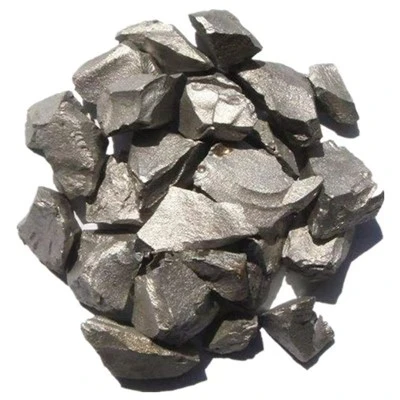
If you’re a manufacturer who needs reliable, high-quality silicon metal, I’ve seen firsthand how even the smallest supply chain hiccup can derail your projects. I’m here to help you avoid those pitfalls. Let’s talk about your specific needs, whether you need 97% pure metal for construction, 99.99% for semiconductors, or anything in between. I can walk you through our production process, share details about our quality control steps, and help you find a solution that works for your budget and timeline.
Inoculant References
Silicon Metal Production: Technology and Economics, International Energy Agency, 2021.
Quartzite Quality and Silicon Metal Purity, Journal of Industrial Minerals, 2022.
Silicon Metal Supply Chain Resilience: Post-Pandemic Trends, Industrial Metals Review, 2023.
Energy Costs in Submerged Arc Furnace Operations, American Foundry Society, 2022.
Jiaocheng County Zemei Metal Co., Ltd.
As one of the most professional silicon metal manufacturers and suppliers in China, we also support customized service with low price. Please feel free to wholesale bulk high quality silicon metal in stock here from our factory. Welcome to contact us for quotation.
Address: Jiaocheng Zemei Metal Co., Ltd., Shihou Village, Jiaocheng County, Lüliang City, Shanxi Province, China
E-mail: dorissunzm@gmail.com
WebSite: https://www.zmfesimg.com/
