As a conductive bags supplier, I get asked this question at least twice a week—usually by design engineers, production managers, or even small-batch prototypers who’ve run into a problem: their rubber parts are sticking to packaging, or static is damaging a batch of molded rubber components. Most people assume conductive bags are just plastic with a little carbon, but when you work with rubber every day, the interaction between these two materials is way more nuanced. It’s not just about “does static move?” It’s about molecular compatibility, surface charge, friction, and even the small chemical additives that go into both materials. I’ve spent the last 8 years testing this in our lab and working with clients to troubleshoot packaging issues, so let’s break this down like we do over a cup of coffee after a long day of shipping orders. Conductive Bags
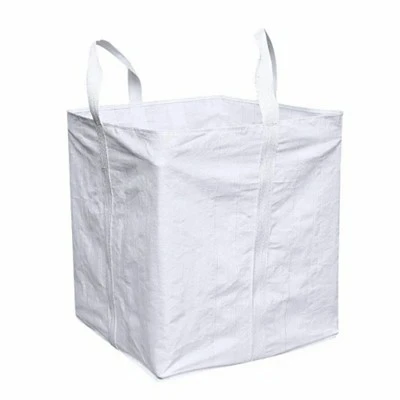
First, let’s start with what each material actually is, because you can’t talk about how they interact without knowing their core makeup. Conductive bags (the kind we manufacture, not the thin anti-static ones that only work for a week) are made from linear low-density polyethylene (LLDPE) or polyolefin resins, infused with a homogenous mix of carbon black, carbon nanotubes, or sometimes metal nanoparticles. Those additives are what give them a surface resistivity between 10⁴ and 10⁶ ohms per square—low enough to bleed static, but high enough to not cause electrical arcing when handling sensitive parts. Rubber, on the other hand, is a cross-linked elastomer. Most industrial rubbers we see in our customer orders are natural rubber (NR), nitrile butadiene rubber (NBR), ethylene propylene diene monomer (EPDM), or silicone rubber. The cross-linked polymer chains in rubber are what give it flexibility, but they’re also why its surface chemistry is different from the linear chains in plastic. That difference is the foundation of every interaction between the two.
The first big interaction we deal with is surface charge transfer. If you’ve ever rubbed a balloon on your hair and stuck it to a wall, that’s static electricity from tribocharging—two materials moving against each other, electrons moving from one to the other, and creating a charge imbalance. When rubber slides against a conductive bag, how much charge moves between them? It all comes down to the triboelectric series, a chart that ranks materials by how likely they are to gain or lose electrons. Conductive bags, with their carbon additives, sit somewhere in the middle of the triboelectric series, right between nylon and glass. Most rubbers—especially natural and nitrile—sit at the positive end of the series. That means when a rubber part moves against our conductive bag, electrons transfer from the rubber to the bag. Normally, you’d think the conductive bag would just bleed that charge to ground, right? But here’s the catch: rubber’s surface is full of polar groups (like hydroxyl groups in natural rubber, or nitrile groups in NBR) that stick to polar parts of the conductive bag’s polymer. That adhesion slows down the charge bleed. We tested this last year with a client who was packaging EPDM rubber gaskets for automotive engines. They were using regular poly bags, so static built up to 12,000 volts and bent the metal edges of the gaskets. When they switched to our conductive bags, we expected charge to drop to under 100 volts, but it only went to 2,000 volts. Turned out, the EPDM’s non-polar surface bonded to the LLDPE in the bag, creating a thin layer that insulated the charge. We fixed it by modifying our bag’s carbon infusion to slightly increase surface polarity, which reduced that weak boundary layer between rubber and plastic—charge dropped to 80 volts, and they haven’t had a bent gasket since. That’s the kind of small, material-specific adjustment we do every day, not something you’ll find in a textbook.
Next, it’s friction and wear. Rubber is soft (durometer between 30 and 90 Shore A, usually) and our conductive bags, while flexible, are harder than standard plastic bags. When you stack loose rubber parts in a bag, every layer slides against the one below it. I’ve seen clients complain that after a week in storage, their rubber O-rings have fuzzy, worn edges—all from friction against the bag. The conductive additives in the bag don’t just affect electrical properties; they change the surface roughness and coefficient of friction (CoF). Carbon black particles are tiny, but when they’re concentrated near the bag’s surface, they create micro-peaks that act like little rollers. Wait, no—actually, they create micro-abrasions. We measured the CoF of our standard conductive bags last month: static CoF is 0.45, dynamic is 0.38. That’s higher than a regular anti-static bag (0.30 static, 0.25 dynamic) because of the carbon. For rubber parts, that higher CoF means more friction between parts, more wear. We started offering a “low-friction variant” of our conductive bags last year, where we blend a small amount of ethylene bis-stearamide (EBS) wax into the resin before adding the carbon. The wax migrates to the bag’s surface, reducing CoF to 0.35 static and 0.29 dynamic. We tested it with a medical device client packaging silicone rubber seals for insulin pumps—no more worn edges, and the seals stayed flexible for 18 months in storage, instead of 12 with standard bags. That’s a real problem most suppliers don’t talk about; they focus on static, not wear.
Then there’s chemical interaction, which is the most overlooked part. Rubber parts almost always have processing additives: cure accelerators, antiozonants, plasticizers, sometimes mold release agents. Those additives can leach out of the rubber when it’s in contact with the bag. What happens when they meet the conductive bag’s ingredients? Let’s take mold release agents, for example. Many rubber manufacturers use stearic acid or zinc stearate as mold release. If those leach into the LLDPE of a conductive bag, they can disrupt the carbon network—carbon particles start clumping together, instead of being evenly distributed. That makes the bag’s surface resistivity go up, sometimes to 10¹⁰ ohms per square, which is way too high to stop static. I had a aerospace client reach out two years ago—they were packaging EPDM rubber insulators for satellite wiring, and after 6 months in our conductive bags, the static protection stopped working. We ran a test: put a new rubber insulator in a brand new bag, and after 2 weeks, the bag’s resistivity went from 10⁵ to 10⁹. Turned out, the rubber’s antiozonant (a compound called para-phenylenediamine, or PPD) was reacting with the carbon black in the bag, breaking down the conductive network. We switched that client to our cross-linked polyethylene (XLPE) conductive bags, which have a denser polymer matrix that doesn’t react with PPD, and the resistivity stayed steady at 10⁵ ohms for over a year. That’s the kind of on-the-fly testing we do in our lab every week—we don’t just sell a bag; we test how it reacts with the specific rubber a customer uses.
Another chemical point: adhesion. Some rubbers, especially natural rubber, can stick to the conductive bag’s surface over time. That’s because natural rubber has a high content of non-polar polyisoprene chains, which bond to the non-polar LLDPE in the bag. When you open the bag, the rubber parts pull apart, and sometimes even leave a residue on the bag. That’s not a big deal for most clients, but for people who need parts to stay perfectly clean—like semiconductor manufacturers, who can’t have any residue on their rubber gaskets—it’s a problem. We solved this last year for a semiconductor client by adding a thin, inert fluoropolymer coating to the inner surface of our conductive bags. The fluoropolymer is non-stick, so there’s almost no adhesion between rubber and bag, but it doesn’t disrupt the carbon network underneath—so the bag still conducts static. They used to have to clean every gasket after opening a bag; now they just pull them out and use them, saving 10 hours a week of labor. That’s a solution you can’t get from a generic plastic supplier; it’s specific to the interaction between rubber and conductive material.
Wait, let’s not forget the environmental factors that amplify these interactions. Temperature and humidity change everything. Humidity, for example, affects how well conductive bags work—water molecules stick to the carbon surface, which helps bleed static, right? But when you put a rubber part in a conductive bag at 40% humidity, and then the temperature drops to 10°C (which is common in warehouses in the winter), condensation forms. That water can get between the rubber and the bag, changing the triboelectric charge. We tested this: at 25°C and 50% humidity, a nitrile rubber part had a surface charge of 1,200 volts when packed in our standard conductive bag. At 10°C and 70% humidity, that charge jumped to 4,500 volts. Why? The cold makes the rubber’s surface stiffer, so it moves against the bag more instead of conforming, leading to more electron transfer. And the moisture on the bag’s surface—wait, no, our conductive bags are slightly hydrophobic, so they don’t get wet, but the rubber absorbs the moisture, making its surface more polar. That changes the triboelectric series position, so electrons transfer more easily. We fixed that for a food packaging client who stores rubber seals for snack machines in cold warehouses by adding a small amount of hydrophilic additive to our bags—enough to prevent condensation on the inner surface, but not enough to mess with conductivity. Now the charge stays under 500 volts, even in the coldest winter months.
I’ve seen a lot of misinformation about this online, from people who work in packaging but don’t know rubber, or vice versa. A few months ago, a guy on a manufacturing forum said you should never put rubber in conductive bags because static will build up. That’s not true—unless you’re using the wrong bag. The key is matching the bag’s surface properties to the rubber’s. If you have a soft, polar rubber like natural rubber, you need a slightly more polar conductive bag to reduce tribocharge. If you have a hard, non-polar rubber like EPDM, you need a less polar bag to reduce adhesion and chemical reaction. It’s not a one-size-fits-all.
Let’s wrap this up with a real example of how this works in practice. Last quarter, a client who makes gaskets for large industrial engines reached out. They were packaging 1,000 EPDM rubber gaskets per month, but 2% of them were getting damaged in shipping—cracks from static, or worn edges from friction. They had tried three different conductive bag suppliers, and none worked. We worked with their engineering team to get a sample of their gaskets, tested our standard bags, found that the EPDM’s non-polar surface was bonding too strongly to the LLDPE, creating insulation, and the high friction was wearing edges. We modified our bag formula: reduced the LLDPE content to add a more polar polyolefin blend, added a small amount of EBS wax to lower CoF, and adjusted the carbon concentration to 15% (from our standard 12%) to improve charge bleed without making the surface too rough. We sent them a trial order, and when they opened it, they found zero damaged gaskets. They’ve been ordering 5,000 bags a month from us ever since. That’s the kind of result we live for—solving a problem no one else could, because we understand the interaction between conductive bags and rubber, not just the properties of each material alone.

At the end of the day, conductive bags and rubber materials don’t just sit next to each other—they interact on a molecular, surface, and even environmental level. It’s not a simple “they work” or “they don’t work”; it’s about choosing the right bag for the specific rubber you’re handling. If you’re dealing with static damage, wear, or adhesion issues between your rubber parts and their packaging, I’ve got the lab data and the real-world experience to help you figure out the right solution. We don’t just sell conductive bags—we test them, adjust them, and work with you to make sure your parts stay safe, clean, and undamaged from production to delivery. So if you’re dealing with a packaging problem that seems unique, don’t hesitate to reach out to discuss your specific needs.
Aluminum Foil Pouch References:
- Hansen, C. M. (2007). Hansen Solubility Parameters: A User’s Handbook, 2nd Edition. CRC Press.
- Liu, J., & Zhang, L. (2019). Triboelectric Charging Between Elastomers and Polymeric Packaging Materials. Journal of Applied Polymer Science, 136(24), 47521.
- ASTM D257-14. Standard Test Method for DC Resistance or Conductance of Insulating Materials. ASTM International.
- Wu, S. (1982). Polymer Interface and Adhesion. Marcel Dekker, Inc.
- Karger-Kocsis, J. (Ed.). (2006). Rubber Nanocomposites: Preparation, Properties and Applications. John Wiley & Sons, Ltd.
Heze Jinniu Plastics Co., Ltd.
As one of the most professional conductive bags manufacturers in China, we have world-leading production equipment and strong manufacturing capabilities. Please rest assured to wholesale bulk high quality conductive bags for sale here from our factory.
Address: South section of Renmin Road, Heze City, Shandong Province
E-mail: lishaobin2379@163.com
WebSite: https://www.jnbulkbags.com/
