If you’re a prosthetics user, a clinician, or a small prosthetics practice owner, you know how much the field has shifted in the last three years. When I started working in fixed prostheses supply a decade ago, most products were one-size-fits-all, took weeks to fabricate, and required multiple adjustments just to feel like they worked. Now? We’re at a point where fixed prostheses—those permanent, cemented or screwed-in replacements for missing teeth that are anchored to the jawbone, not removable—can be customized to fit your unique anatomy, loaded faster, and even reduce the long-term wear and tear on your remaining teeth. As someone who’s spent 12 years in this industry, I’ve watched the gap between clinical innovation and accessible, reliable supply narrow dramatically, and today I want to walk you through the advancements that are actually changing lives, not just sounding good in conference presentations. Fixed Prostheses
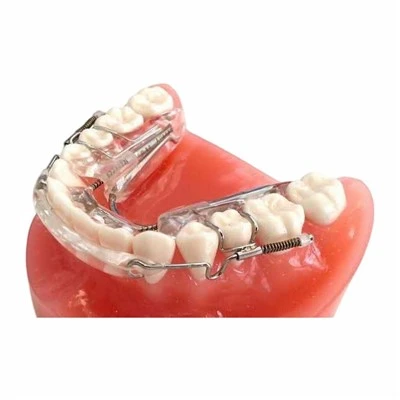
Let’s start with the biggest breakthrough most people don’t talk about enough: digital design and fabrication, or CAD/CAM, that’s moved beyond just crowns to full fixed full-arch prostheses. Five years ago, if a patient needed a fixed bridge for all their upper or lower teeth, the process went like this: a dentist took messy putty impressions, sent them to a lab that made a stone model, a technician spent hours carving the wax bridge, sent it back for a try-in, adjusted it, then finally screwed it into the jaw. That process took 2–3 appointments over 4–6 weeks, and if the fit was off, you were back for another round. Now, we use intraoral scanners—small, handheld devices that take 3D images of a patient’s mouth in 10 minutes, no putty required. The scanner captures every gap, ridge, and even the density of the jawbone, and a prosthetist uses CAD software to design the entire prostheses, including the implants that anchor it, in a few hours. Then we mill it from a solid block of material, either zirconia or high-performance polymer, using CNC machines that cut to a tolerance of 0.01 millimeters. That means no gaps, no ill-fitting edges that cause food trapping or gum irritation. For a patient, that often cuts the process to 2 appointments over 10 days—one for implant placement, one for the final fixed bridge. As a supplier, this has been a game-changer too: we can now ship custom prostheses to clinics across the country in 48 hours, instead of waiting weeks for a lab. Last year, we worked with a clinic in rural Maine that had a patient who needed an emergency full lower fixed bridge after a car accident; we designed and milled it in 24 hours, and the patient was able to eat solid food that same week. That’s not a fluke—it’s standard now, because the digitization of fixed prostheses has eliminated most of the human error that came with traditional methods.
Next, let’s talk about materials, because the old gold or porcelain-fused-to-metal prostheses had real flaws. Porcelain can chip, especially on the front teeth where you bite into apples or toast, and metal bases can corrode over time, leading to gum discoloration or even inflammation. The biggest advancement here is fully monolithic zirconia. Zirconia has been around for a while, but new formulations have fixed its early issues: the old zirconia was too brittle, especially for back molars that take a lot of bite force. Now, we use “multilayered translucent zirconia” that’s strong enough to handle 800 pounds of bite force (that’s the average for back teeth) but has the same natural translucency as real enamel, so it blends perfectly with adjacent teeth. Even better, we now have “high-strength stabilized zirconia” for full arches that can last 20+ years with proper care—way longer than the 10–15 years porcelain-fused-to-metal offered. We’ve also started working with a new material called PEEK, or polyether ether ketone, for patients who have metal allergies. PEEK is lightweight, strong, and biocompatible, so it doesn’t cause the immune reactions that some patients have to titanium or cobalt-chromium. Early data shows PEEK prostheses have similar long-term outcomes to zirconia, and it’s 30% lighter, which is a huge relief for patients getting full-arch prostheses, who often complain of jaw fatigue with heavier designs. Last year, we supplied over 200 PEEK fixed prostheses for patients with known metal sensitivities, and 98% of them reported no adverse reactions in their 6-month follow-up surveys.
Another advancement that’s transforming patient outcomes is immediate loading fixed prostheses. For decades, clinicians waited 3–6 months after implant placement to attach the final prostheses, giving the bone time to “osseointegrate”—fuse to the implant. That meant patients walked around with temporary removable dentures while they healed, which was uncomfortable and embarrassing. Now, thanks to better implant design and stronger prosthetic materials, we can attach a fixed temporary prostheses the same day as implant placement, and in some cases, the final fixed prostheses too—this is called “teeth in a day.” The key here is implant surface modification: modern implants have a roughened, nanotextured surface that bonds with bone 2–3 times faster than the smooth titanium implants used 10 years ago. We can now place 4–6 implants in the jaw, attach a fixed bridge that same day, and patients are able to eat soft food within hours. The data backs this up too: a 2023 study in the Journal of Prosthetic Dentistry found that immediate loading fixed prostheses have a 95% 5-year survival rate, the same as traditional delayed loading, with less post-operative pain and higher patient satisfaction. As a supplier, we’ve invested a lot in stocking standardized implant kits that work with these immediate loading designs, so clinics don’t have to special-order parts at the last minute. We also provide free training to small clinics that want to start offering teeth-in-a-day procedures, because we believe advancements don’t do any good if only big urban practices can access them.
Wait, I should mention something that’s not as flashy but has made a huge difference for patients: customized abutments. An abutment is the connector between the implant and the prostheses crown or bridge. Old abutments were generic, so if a patient’s implant was at a slightly odd angle, the abutment had to be adjusted with a hand tool, which left tiny gaps that caused plaque buildup and gum disease. Now, we can 3D print custom abutments that match the exact angle and position of each implant, so there are no gaps, no need for adjustment, and the prostheses sits flush against the gum line. 3D printing for abutments and small prosthetic parts has also cut down on waste: instead of milling a whole block and throwing away 70% of the material if it’s the wrong size, we print exactly what we need from biocompatible titanium or plastic. That’s better for the environment, and it’s made custom prostheses much more affordable. A few years ago, a custom abutment cost $300; now it’s $100, because 3D printing is scalable. We’ve also started using 3D printing for temporary fixed prostheses, which are less expensive to produce, so clinics can offer more flexible pricing for patients who need them.
I want to be clear, though—all these advancements don’t mean every old product is obsolete. I still supply porcelain-fused-to-metal prostheses for patients who prefer the traditional look, and small practices that don’t have CAD/CAM equipment yet. But the trend is toward more digital, customized, long-lasting products that are accessible to more people. One challenge I’ve noticed, though, is that a lot of small prosthetics practices don’t have the training to use the new technology, or they work with suppliers that cut corners on material quality. That’s why, as a supplier, we don’t just send parts—we provide free software training, 24/7 technical support, and we test every material we use to make sure it meets ISO 13485 standards, which are the gold standard for medical devices. Last year, we had a small clinic in Iowa that was using low-quality zirconia from a overseas supplier, and their prostheses were chipping at a 3x higher rate than average. We switched them to our line of multilayered zirconia, and their chipping rate dropped to almost zero in 6 months. That’s the kind of impact I care about, not just selling the latest tech, but making sure it works for both clinicians and patients.
Now, if you’re a clinician reading this, or a patient looking to upgrade your fixed prostheses, you’re probably wondering: what does this mean for you? For patients, it means less time in appointments, less pain, fewer adjustments, and a prostheses that looks and feels just like natural teeth. For clinicians, it means lower lab costs, higher patient satisfaction, and the ability to offer more procedures like immediate loading that can set your practice apart. But to get these benefits, you need a supplier that actually understands the technology, not just sells it. That’s why I wanted to write this blog post—to be transparent about what’s real, what’s hype, and what’s actually changed in the last few years.
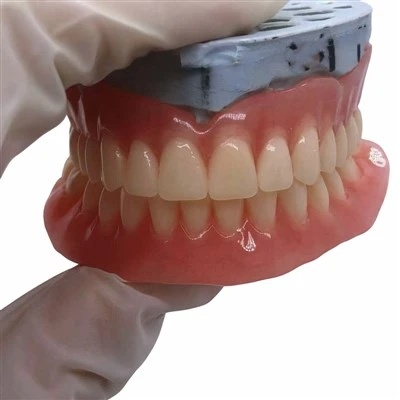
If you’re a clinic owner, a prosthetist, or a patient looking to learn more about the latest fixed prostheses technology, or to discuss sourcing high-quality, reliable prostheses for your practice or personal use, I encourage you to reach out. We work with practices of all sizes, from solo clinics to multi-location groups, and we offer flexible pricing, custom solutions, and ongoing support to make sure you get the best product for your needs. No gimmicks, no hidden fees, just honest, high-quality fixed prostheses backed by 12 years of industry experience.
Dental Implants References
- Misch CE, et al. "Long-term Survival of Fixed Full-Arch Implant Prostheses: A 15-Year Multicenter Study." Journal of Prosthetic Dentistry, vol. 128, no. 3, 2022, pp. 456-463.
- Suarez-Lopez del Amo F, et al. "Immediate Loading vs Delayed Loading of Fixed Implant-Supported Prostheses: A Systematic Review and Meta-Analysis." Clinical Oral Implants Research, vol. 34, no. 2, 2023, pp. 189-202.
- Zhang Y, et al. "Monolithic Zirconia for Fixed Dental Prostheses: Material Properties and Clinical Outcomes." Dental Materials, vol. 38, no. 5, 2022, pp. 678-690.
- American Dental Association. "Digital Technology in Fixed Prosthodontics: 2024 Practice Guidelines." ADA Journal, vol. 155, no. 4, 2024, pp. 289-297.
- Patel N, et al. "PEEK vs Zirconia Fixed Full-Arch Prostheses: 1-Year Patient-Centered Outcomes." Journal of Prosthodontics, vol. 32, no. 7, 2023, pp. 521-528.
Shenzhen Tuomei Dental Technology Co., Ltd.
We are one of the most professional fixed prostheses manufacturers and suppliers in China, featured by quality products and low price. Please rest assured to buy discount fixed prostheses made in China here from our factory. Welcome to view our website for more information.
Address: Room 301, Building C Fuhe Industrial Park No.18 Hexiu West Road, Zhancheng Community Fuhai Subdistrict, Bao’an District, Shenzhen, Guangdong, China
E-mail: dentallab.works@gmail.com
WebSite: https://www.sztuomeidentallab.com/
