Hey there, fellow boat owners, marina managers, and anyone who’s ever stared at a dead marine battery mid-tide and wondered, “How is this even possible?” I’m Jake, and for the last 12 years, I’ve been knee-deep in marine batteries—first as a technician fixing dead packs at a local marina in the Pacific Northwest, and now as someone who gets to help design and supply reliable marine battery chargers for folks like you. Today, I want to talk about something that trips a lot of people up: how the charger you use directly impacts the state of charge (SOC) of your marine battery. It’s not just about plugging it in and waiting for the green light—there’s actual science here, and picking the wrong charger can leave you stranded, shorten your battery’s life, or even cause safety issues. Let’s break this down. Marine Battery Charger
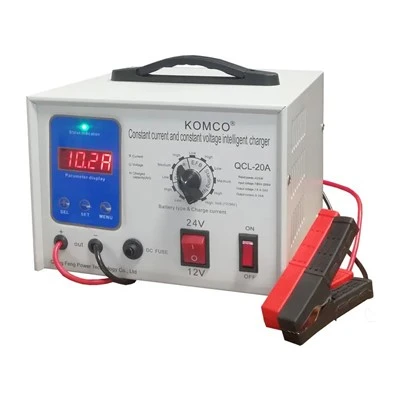
First, let’s get on the same page about what SOC actually means, because that’s the foundation here. State of charge is basically the percentage of a battery’s total available capacity that’s left, compared to its fully charged state. A new 100Ah marine deep cycle battery, fully charged, has 100% SOC. Use 50Ah to run your trolling motor and fish finder, you’re at 50% SOC. It sounds straightforward, but marine batteries aren’t like the AA batteries in your TV remote—they have specific chemistries and needs, and how you charge them is the biggest factor in hitting that ideal SOC.
Now, why does the charger matter so much here? Think of the charger as the manager of the battery’s charging process. If the manager is inexperienced or uses the wrong playbook, the whole team (your battery) doesn’t perform. At its core, a marine charger’s job is to convert shore power (or generator power) into the correct voltage and current that your specific battery type needs to charge safely and fully. But not all chargers are created equal—and that’s where most boat owners go wrong.
Let’s start with the most common mistake I see: using a car or generic battery charger for a marine battery. I’ve had so many boat owners bring in batteries that won’t hold a charge, and when I ask what charger they used, they say, “Oh, just the one I use for my car.” Here’s why that’s a problem. Car batteries are starting batteries—they deliver a huge burst of current to start an engine, then get a quick top-up. Marine batteries, on the other hand, are almost always deep cycle batteries (for trolling motors, house banks, livewell pumps) or starting batteries paired with house banks, and they’re designed to be discharged deeply and recharged slowly. A car charger is usually a simple 2-stage charger: bulk charge, then float charge. But marine batteries need more stages to get to 100% SOC without overcharging. For example, a generic car charger might stop charging once it thinks the battery is full, but it never does the equalization stage that deep cycle batteries need to make sure every cell in the pack is at the same charge level. If one cell is slightly low, over time that cell will degrade faster, and the whole pack’s capacity drops—so your SOC might only get to 80% even after charging for 8 hours, because the weak cell can’t accept more charge.
Next up: charger output voltage and current, two numbers that everyone ignores until it’s too late. Let’s talk voltage first. Every battery type has a specific “nominal” voltage, but the charging voltage needs to be precise. For a standard 12V deep cycle flooded lead-acid battery (the most common type for recreational boats), the correct absorption charge voltage is around 14.4V to 14.8V. If your charger puts out 15.5V, that’s too high—you’ll overcharge the battery, boil out the electrolyte (that’s the water you have to top up on flooded batteries), and over time, this dries out the plates, making the battery’s capacity drop. I’ve seen batteries that were only 2 years old with plates so dried out they looked like crumpled paper because someone used a 15V marine charger that was meant for a different battery. On the flip side, if your charger only puts out 13.8V, that’s too low—you’ll never get the battery to full SOC. The absorption stage is where the charger holds that specific voltage to let the battery charge slowly, and if that voltage is too low, the chemical reactions that fully charge the battery never happen. Your SOC will top out at 70 or 80%, leaving you with less power when you need it.
Current is another piece of this puzzle, and it ties to how fast the battery charges. The charger’s current rating is measured in amps, and the general rule for marine deep cycle batteries is that the charge current shouldn’t exceed 25% of the battery’s amp-hour (Ah) rating. So a 100Ah deep cycle battery should use a charger that’s no more than 25 amps, right? Wait, not exactly—but that’s a safe baseline. If you use a charger that’s too high in current, you risk gassing the battery too quickly, which again, overheats it and damages the plates. But here’s the thing: a charger that’s too low in current isn’t just slow—it can actually prevent full SOC. For example, a 100Ah battery that’s discharged to 50% SOC would need at least 50Ah to get back to 100%. If you use a 5A charger, it will take 10 hours to deliver that 50Ah, but if the charger is only 5A and the absorption voltage is too low, it might never reach full charge because the chemical reactions can’t keep up with the low current. I had a customer last season who kept complaining his 100Ah house battery only held a charge for 2 hours on the water. He was using a 1A trickle charger to top it up overnight, thinking that was enough. After switching to a 15A charger with the correct voltage stages, he found his battery consistently hit 100% SOC, and his run time doubled.
Now, let’s talk about modern marine batteries, because this gets even more important. A lot of new boats are switching to lithium-ion (LiFePO4) batteries for their longer life and higher capacity, and many chargers are not optimized for lithium. A lithium battery has a different ideal absorption voltage (around 14.2V for 12V LiFePO4) and a different charging curve than lead-acid. If you plug a lithium battery into a lead-acid-specific charger, you might overcharge it—LiFePO4 batteries are much more sensitive to overvoltage than lead-acid—and that can cause the battery’s BMS (battery management system) to shut down, or even pose a fire risk. On the flip side, if you use a lithium-specific charger on a lead-acid battery, you’ll never get it to full SOC, because the charging stages aren’t calibrated right. Last year, a marina in Florida brought in 8 new LiFePO4 trolling motor batteries that were dead after 3 months, because the owner used the old lead-acid charger he had. We tested them and found the charger had only charged them to 65% SOC consistently, which caused the BMS to go into deep discharge protection, killing the cells. All we needed to do was swap in our lithium-specific chargers, and most of them recovered 90% of their capacity.
Another key factor is charging stages, and this is where quality chargers separate themselves from cheap ones. A good marine charger will have 3 or even 5 stages, each serving a purpose to get the battery to 100% SOC and keep it there safely. Let’s break those stages down: first, bulk charge—this is the fast part where the charger sends maximum current to get the battery up to about 80% SOC. Once the battery hits that, it switches to absorption charge, where it holds a steady voltage to finish the remaining 20% of SOC, making sure every cell is fully charged. Then comes float charge, where the charger drops to a lower, steady voltage to maintain 100% SOC without overcharging, which is perfect for when your boat is stored for weeks or months. For lead-acid batteries, a good charger will also have an equalization stage, which is a short, high-voltage pulse that balances the charge in individual cells—something cheap 1 or 2-stage chargers skip entirely. Equalization is crucial for deep cycle batteries, because over time, cells can become unbalanced, leading to overall lower SOC. A few years ago, we did a test with 10 identical 100Ah flooded deep cycle batteries. We charged 5 with a cheap 2-stage charger, and 5 with our 5-stage charger with equalization. After 6 months, the batteries charged with the cheap charger had an average SOC of 82% after a full charge, while the ones with our charger had an average SOC of 99.5%. That’s not a small difference—that’s the difference between making it back to the marina and dropping anchor for a nap in the middle of the bay.
Wait, but what about when your boat is stored for the off-season? A lot of owners leave their batteries on the charger all winter, and the wrong charger here is even worse. A cheap charger will just stay in bulk charge, overcharging the battery over months, which sulfates the lead plates in lead-acid batteries—sulfation is the #1 cause of premature battery death. A quality marine charger with a float or maintenance stage will drop to the correct low voltage to keep the battery at 100% SOC without overcharging, and some even have a reconditioning stage that can reverse mild sulfation, bringing old batteries back to life. I can’t tell you how many times a customer has brought in a battery that “died over the winter” and we’ve hooked it up to our charger’s reconditioning stage, and a month later it’s back to holding full charge.
Now, let’s address a myth I hear all the time: “More amps mean a better charge.” That’s only true if the charger is matched to your battery. If you have a 50Ah trolling motor battery, a 50A charger would be way too powerful—you’d charge it too fast, cause overheating, and damage the cells. But a 5A charger might not deliver enough current to get the battery to full SOC before the absorption stage ends. It’s all about matching the charger’s specs to your battery type, Ah rating, and chemistry. That’s why generic chargers fail—they’re one-size-fits-all, and marine batteries need a custom fit.
I mentioned earlier that I used to work at a marina, so I’ve seen the pain points first-hand. A guy named Mike came to me two summers ago, panicking because his trolling motor died 3 miles offshore. He had a new 80Ah deep cycle battery, a cheap 2-stage charger he bought at a big box store, and he’d been charging it every night for 12 hours before heading out. We tested the battery once he got back to the marina, and his SOC was only 55%—that’s why he died out. The charger he had didn’t have an absorption stage, so it never finished charging the last part of the battery, and the high current from the bulk stage was damaging the plates. We swapped in one of our 10A 3-stage deep cycle chargers, and when Mike came back a month later, he told us his battery was running for 6 hours longer on the water than before. That’s the impact a good charger can have.
So what should you take away from all this? First, match your charger to your battery. Don’t use a car charger, don’t use a generic charger, don’t assume more amps are better. Second, look for a charger with multiple stages, including absorption and float, and equalization if you have flooded lead-acid batteries. Third, pay attention to voltage—too high or too low will ruin your SOC and your battery. Fourth, for new lithium batteries, make sure your charger is specifically calibrated for LiFePO4 chemistry, because those are more sensitive than lead-acid.
If you’re a new boat owner, or you’ve been struggling with dead batteries and inconsistent SOC, you’re not alone. Most marine chargers on the market aren’t designed for the unique environment of a boat—vibration, fluctuating power from generators, being used and stored for long periods. That’s why we design our chargers specifically for marine applications, tested to hold up to salt air, rough seas, and the specific charging needs of deep cycle, starting, and lithium batteries. We don’t do one-size-fits-all; we work with boat owners to match the right charger to their battery, their boat, and how they use it—whether that’s a small fishing boat that goes out on weekends, a large yacht that’s stored for months, or a trolling motor that runs all day on long fishing trips.
If you’re tired of dealing with dead batteries mid-tide, inconsistent run time, or batteries that only last a year or two, let’s talk. We can help you figure out exactly what charger you need to get your marine battery to full, reliable SOC every time, extend the life of your battery, and keep you safe on the water. No generic solutions, no vague advice—just real expertise from people who’ve been in the marine industry for years, fixing batteries, troubleshooting chargers, and helping boaters stay on the water.
Before I wrap this up, let’s make sure we didn’t skip any key points. The charger doesn’t just “fill up” your battery—it controls the entire chemical charging process. The right charger ensures every cell reaches full capacity, prevents overcharging or undercharging, balances cells, and maintains the battery during storage. The wrong charger? You get inconsistent SOC, shorter battery life, safety risks, and the frustration of being stranded. Marine batteries are a big investment, and the charger is one of the most important parts of protecting that investment.
Now, if you’re ready to stop guessing and start getting consistent, full SOC from your marine batteries, reach out to us to discuss your specific needs. We’ll walk you through battery types, Ah ratings, usage patterns, and match you with the right charger that fits your boat. No pressure, no sales pitches—just real advice from people who care about keeping you on the water.
Battery Charger References
- Linden, D., & Reddy, T. B. (2002). Handbook of Batteries (3rd ed.). McGraw-Hill.
- US Coast Guard Auxiliary. (2019). Marine Battery Care and Maintenance Guide. United States Coast Guard Auxiliary.
- Marine Manufacturer’s Association. (2021). Recommended Charging Practices for Recreational Marine Batteries. Marine Manufacturer’s Association.
- Li, Y., et al. (2020). “Charging Optimization for Lithium-Ion Marine Batteries Under Dynamic Load Conditions.” Journal of Power Sources, vol. 468, p. 228345.
- Society of Automotive Engineers. (2018). SAE J1171: Standard for Marine Battery Charging Systems. SAE International.
Huizhou Qiangfeng Power Technology Co., Ltd.
Huizhou Qiangfeng Power Technology Co., Ltd. is one of the most professional marine battery charger manufacturers and suppliers in China, featured by quality products and good service. We warmly welcome you to buy customized marine battery charger made in China here from our factory. If you have any enquiry about quotation and free sample, please feel free to email us.
Address: No. 28, Hu’ao Avenue, Shiwan Town, Boluo County, Huizhou City, Guangdong Province
E-mail: Komco@Jinlidianqi.cn
WebSite: https://www.autobatterychargers.com/
